
If your asphalt driveway keeps cracking, no matter how many times you fix it, you are not alone. Homeowners searching for asphalt paving near me have found that small repairs are no longer doing the job. Frequently, sinking spots, cracks, and pooling water are signs of problems that patching won’t remedy. This is especially common for homeowners in Buffalo, NY, including neighborhoods like Amherst, Cheektowaga, and the 14221 and 14225 zip code areas, where freeze-thaw cycles are frequent, particularly in areas near Delaware Park and close to Buffalo Niagara International Airport, where weather exposure varies significantly.
In this guide, we will take you through some of the most common warning signs that your driveway is in need of full replacement over continued repairs. Learning the signs can save you money, frustration, and make a good decision for the long run.
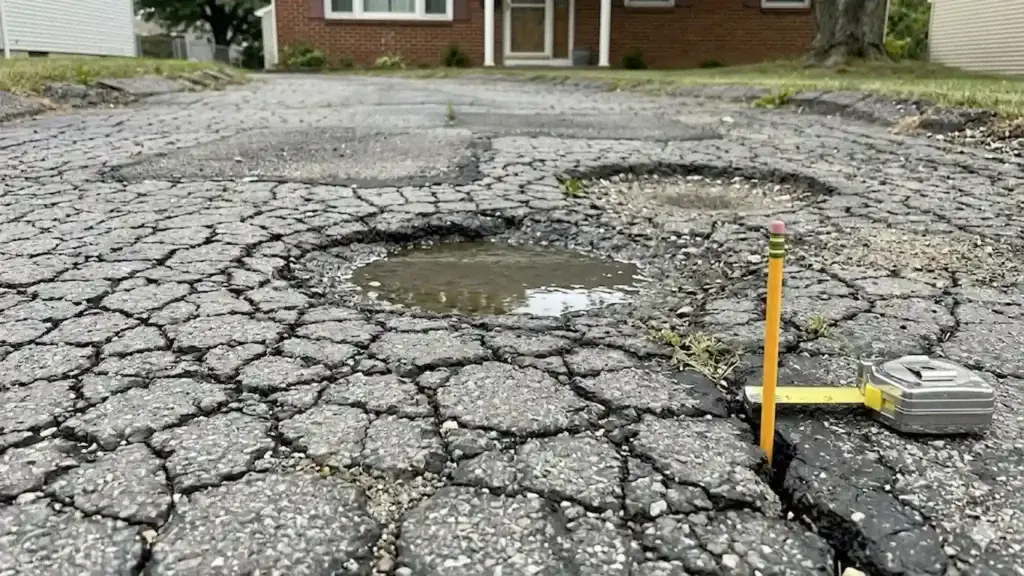
Sign 1: Alligator Cracking Across the Surface
One clear red flag is a pattern of cracks that resembles reptile skin. These are known in the trade as a type of asphalt crack, specifically fatigue cracking.
When you see this creeping across your driveway, it is generally a sign of more serious structural problems. Alligator cracking causes include a variety of common issues, including a weak base, poor installation, or repeated excessive heavy loads over time. In regions that experience freeze and thaw cycles, this is exacerbated by weather changes, especially near Lake Erie, where moisture and temperature shifts are more extreme, leading to accelerated asphalt binder deterioration and reduced load-bearing capacity.
This is not a cosmetic problem. It indicates that the base under your asphalt is failing. The cracks will come back quickly because the base is still unstable, while patching it may give some temporary eye relief. A similar base failure led to a parking lot falling apart in just 3 years – here’s what the contractor did wrong.
At this point, homeowners usually know when repairs stop working. You would patch one area, then new cracks would develop in another part of the building. This cycle can repeat until the entire surface becomes compromised.
If you’re noticing all over cracking, it may be time to call All Pro Paving, (716) 666-4241, for an assessment.
Sign 2: Patches and Repairs Cover More Than 30%
One clear indication that your driveway needs more than a simple fix is when repairs start to take over the surface. If more than 30% of your driveway has been patched, replacement may be in order.
Using asphalt repair services can become expensive. One individual repair seems fairly inexpensive, but in the long run it could easily add up to more money than you would spend to buy a new complete.
Homeowners here grapple with driveway replacement cost vs repair. While repairs serve their purpose for singular problems, replacement is often the cheaper solution when damage is widespread and provides a more permanent fix. This is a common situation for older driveways in Buffalo suburbs like Tonawanda and West Seneca.
A patched driveway is also an ugly driveway. It diminishes curb appeal and can even decrease property value.
Rather than band aids, it might make more sense to spend on a long-lasting new driveway. For a professional opinion, call All Pro Paving, (716) 666-4241.
Sign 3: Drainage Issues and Standing Water
Water is one of asphalt’s greatest enemies. Where puddles form after rain, your driveway may be draining poorly.
Puddles of water infiltrate tiny fissures in the surface and compromise the structure underneath. Over time, this leads to base failure symptoms such as soft spots, deeper cracks, and ultimately, collapse. This is often caused by sub-base failure and poor compaction density during installation.
Like any other surface, drain ability is vital for a sound driveway. If your existing surface is not draining water, simply replacing it will not solve the issue. The slope and base may need to be rebuilt from scratch. Professional asphalt contractors often evaluate grading and sub-base compaction to fix these issues properly.
This is also when resurfacing eligibility comes into question. But this can only be done if the base is still strong. If the foundation has been compromised by water, the new surface will not hold.
Sign 4: Sinking or Uneven Sections
If sections of your driveway are sinking or feel bumpy when walking or driving over them, this is a major structural warning sign.
An uneven surface is usually a sign of issues below the surface. These might be soil erosion, improper compaction at installation, or damage from water. These are all base failure symptoms that can’t be fixed with surface repairs. In colder climates like Buffalo, frost heave is also a major contributing factor, caused by repeated freeze-thaw expansion cycles that weaken the asphalt structure.
You will see ponds or high spots that make for a bumpy ride. Over time, these can deepen and create cracks, potholes, and unsafe conditions.
This is where DIY crack repair vs professional alternatives comes into play. Cosmetic fixes will be extremely tempting but will not address fundamental, structural issues. Professionals know how to peel back damage until there is a sound foundation for repair.
This ensures your new driveway will be stable for years to come. This sometimes includes the aggregate base placement and asphalt compacting methodologies that are used in professional paving.
If your driveway feels uneven or unsafe, do not delay. To learn more, call All Pro Paving at (716) 666-4241.
Sign 5: Large Potholes Forming Frequently
Potholes are an obvious indicator of a material/structural failure within your driveway. These occur when moisture infiltrates the asphalt surface and causes the sub-layers to deteriorate, resulting in surface failure under pressure.
If you are routinely repairing potholes, it is a good indication that the base has lost its load-bearing capacity, and there is no point in further repairs.
Sign 6: Edge Cracking and Crumbling Sides
Cracks or spalling at the edges of your driveway can indicate that the edges were not properly supported or that the base material has eroded. This sort of damage occurs in older driveways and indicates clearly that the driveway is failing from the outside in.
Sign 7: Driveway Age Exceeds 15 – 20 Years
Asphalt driveways are generally good for 15 to 20 years. If your driveway falls into this range or outside of it (and is exhibiting multiple problems), replacement is generally the best financial option. As asphalt ages, it becomes less flexible and is more susceptible to cracking and failure. For a deeper look at how long Buffalo driveways typically last and when to resurface instead of replace, read our full guide on asphalt driveway lifespan in Buffalo NY.
Quick Tip: The Pencil Test for Driveway Health
You can perform the pencil test to see what condition your driveway is in. Try to slip a pencil into a crack.
If the crack is wider than the pencil or up to a depth that it disappears, the damage is more than surface level. This may suggest structural problems that go beyond simple repairs.
Comparing Repair vs Replacement
Below is a simple table to help you understand when to repair and when to replace your driveway:
| Condition | Repair Recommended | Replacement Recommended |
| Small cracks | Yes | No |
| Isolated damage | Yes | No |
| Widespread alligator cracking | No | Yes |
| Drainage issues | No | Yes |
| Uneven or sinking areas | No | Yes |
| More than 30% patched | No | Yes |
This comparison shows why it is important to recognize when repairs stop working. Continuing repairs in the wrong situation can waste time and money. If you’re wondering what a new driveway actually costs in Buffalo, check out this breakdown of three real driveway quotes and what one homeowner learned about pricing.
Pro Tip: Always go to the source of the trouble and solve that. Most driveway problems originate below the asphalt. Installing a good base when replacing will ensure a longer-lasting driveway and save you on costly maintenance in the future. Professional asphalt paving contractors use proper sub-base preparation and compaction standards to prevent premature failure. If you’re unsure where to start, a quick search for asphalt paving near me can connect you with local experts.
Why Does Asphalt Keep Cracking?
It often leaves homeowners groping for answers as to why their driveway is failing. The answer usually lies in a combination of weather, heavy loads, and poor installation and maintenance. Still trying to decide between concrete and asphalt? See why 5 Buffalo homeowners switched from concrete to asphalt and what made them change.
Learn how to recognize asphalt cracks types to diagnose the cause. For example, small, hairline cracks can be due to aging, while larger patterns indicate structural problems.
Routine maintenance, such as sealing, can help, but cannot remedy underlying issues. This is why knowing when repairs stop working is crucial. Services like driveway sealing buffalo ny can help extend lifespan, but only when the base is still strong.
According to the Federal Highway Administration (FHWA), proper base preparation and drainage are critical to asphalt longevity.
When Should You Replace Your Driveway?
Timing is also crucial when it comes to replacement. Don’t wait too long, as this can cause more damage and expense.
If you’re seeing several of these signs, like cracking, sinking, and drainage problems, it’s probably time to take action. Only a professional inspection will be able to let you know if your driveway is a candidate for repair or if replacement would be a better option.
Searching for asphalt paving near me is often the first step to finding a reliable contractor to walk you through the process.
Conclusion
Curb appeal is more than a matter of looks. It can signal deeper problems that need to be addressed. If you learn these signs early, you can be proactive and avert expensive blunders.
If your driveway is exhibiting major cracking, drainage problems, or significant heaving, a full replacement may be warranted. Rather than continually throwing money at repairs, upgrading to a new driveway will be a more permanent solution.
For professional advice and service, call All Pro Paving Service at (716) 666-4241. They will work with you to find the right option for your driveway and achieve a long-lasting finished product.
FAQ
How do I know if my driveway needs replacing?
If your driveway has vast cracks, drainage issues, or areas that are uneven, your driveway probably needs to be replaced rather than repaired. A quick search for asphalt paving near me can help you find local experts to assess the damage in person.
Why does my asphalt keep cracking?
Cracking is also caused by weather changes and heavy loads, but also by weak base layers. These problems compound over time.
What are some common symptoms of base failure?
Signs can be pooling water, large cracks, and areas that may begin to sink. These represent submerged issues.
Can I repair driveway cracks myself?
Small cracks can be fixed by the average homeowner, but larger or recurring cracks should be examined by a professional.