
The winters in Buffalo are not easy. Heavy snow, constant freeze-and-thaw cycles, road salt, and long, cold months all put pressure on every driveway material. When homeowners compare tar and chip vs. gravel vs. asphalt in Buffalo, they usually want to know which surface lasts longest and requires the least maintenance.
Serving Buffalo, NY and surrounding Western New York communities, including Cheektowaga (14225), Amherst (14226), Tonawanda (14150), and neighborhoods near Lake Erie, Downtown Buffalo, Elmwood Village, and North Buffalo.
In this guide, we compare real-world performance, cold-climate asphalt solutions, and practical tips for Buffalo homeowners, and practical tips from driveway comparison Buffalo conditions. You’ll learn how each one handles snow and ice, and how they stand up to repeated freezing throughout winter, so you can make a wise, long-term choice.
If you’re considering a new driveway or repairing an existing one, many homeowners turn to trusted sources, like All Pro Paving Service (716) 666-4241, to find out what’s best for their property in Western New York.
They specialize in local driveway solutions, including Asphalt Paving Services, Driveway Installation, Tar and Chip Driveways, Gravel Driveway Installation, and Asphalt Sealcoating tailored specifically for Buffalo’s freeze – thaw climate.
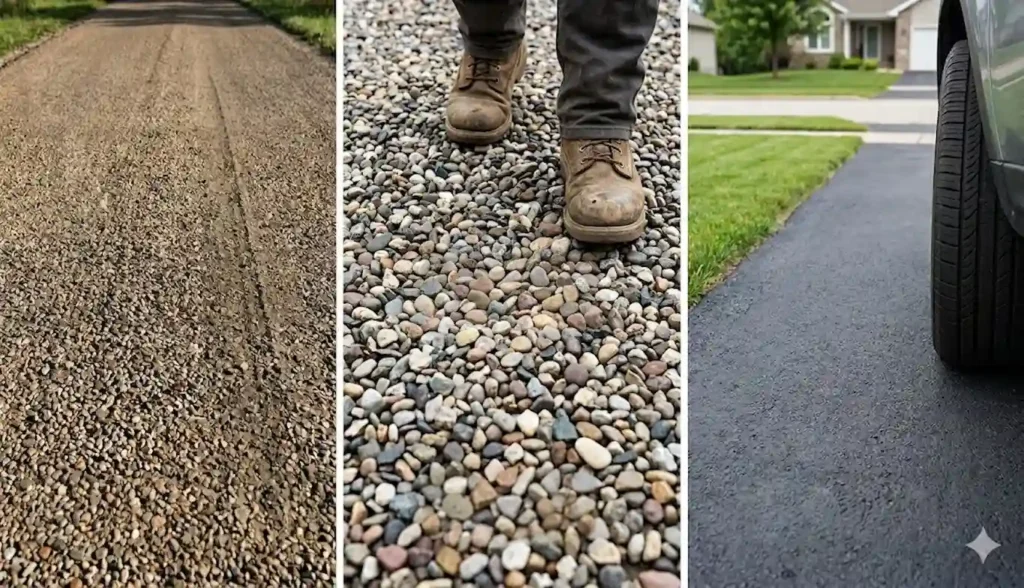
How We Tested Each Surface Through Buffalo Winters
To understand performance, we look at each surface in response to the largest winter stressors: snow plowing, salt exposure, water penetration, and freeze thaw resistance.
Buffalo winters can swing wildly. One day it’s freezing, the next it’s a few degrees above freezing, then freezing again. This frequent expansion and contraction of the driveway materials leads to cracking, shifting, or degradation of the surface over time.
This is especially true in high-traffic suburban zones across Western New York, including areas near Highmark Stadium and the Buffalo Niagara International Airport corridor.
Factors in determining these options were durability, maintenance, and longevity cost, as well as winter usability. Homeowners will depend on local paving contractors in Buffalo, NY like All Pro Paving Service (716) 666-4241, who know how to determine what surface will work best for a given slope, soil, and drainage conditions.
Knowledge of material responses to water is also vital for long-term considerations. Freeze-thaw cycle moisture can seep in and expand, causing damage. That is where the asphalt winter performance comparison comes in.
Asphalt: The Winter Workhorse With One Weakness
Most people consider asphalt when it comes to sturdy driveways for cold climates. Newer asphalt paving in Buffalo, NY is specifically designed for places like Buffalo with harsh and unpredictable winters.
Unlike hard concrete, Asphalt has the ability to, expanding and contract slightly with temperature, limiting cracking. This makes it one of the most durable asphalt products for commercial and residential driveways.
Its best feature is its snow removal ability. Plows work well on asphalt; salt does not deteriorate it as quickly as other substances. This is one of the main reasons that it is used for the long term by homeowners.
But asphalt is not flawless. Through summer UV exposure and winter salt, this can wear down over time. Without proper sealing, small cracks may form and allow the penetration of water, which can subsequently freeze and cause damage.
But, for long term durability and low maintenance, asphalt is still the most balanced for driveway comparison Buffalo conditions. It’s also helpful to know how long an asphalt driveway in Buffalo, NY typically lasts so you can plan for the future.
Knowing that asphalt is not created equally, homeowners often call All Pro Paving Service to install or resurface asphalt driveways that are designed to last through many freeze thaws.
The Federal Highway Administration has some helpful technical information regarding pavement performance in cold climates.
Tar and Chip: The Underrated Winter Performer
Tar and chip driveways, also known as chip seal, are underrated and surprisingly effective in cold climates. This process involves covering a hot, liquid asphalt surface with small stones, or chips, to provide a hard-wearing, inexpensive surface.
The durability of tar and chip grip is its main strength. The coarse surface is also extremely helpful when it is icy, in Buffalo winter weather, this is a serious issue as slipping is a real danger.
A second advantage is price. Tar and chip is often cheaper than full paving and has reasonable winter resistance when compared to asphalt. It also has a pleasing rural appearance and is a popular rural driveway option for Buffalo homeowners.
But it requires some upkeep. New loose stones might become visible, particularly if there has been intensive plowing. Snow removal should be carefully done so as not to disturb the surface.
In chip seal pros and cons discussions, many homeowners compare it to this as well. Advantages are appearance, affordability, and traction. The disadvantages are occasional loss of stone and a rougher driving surface than asphalt.
Still, for winter conditions, tar and chip often surprises people with its performance under repeated freeze and thaw cycles.
Gravel: Simple, But Not for Everyone
Gravel driveways are the most straightforward and oftentimes the least expensive option. They are often used in rural areas and on large properties because they are easy to install and maintain in the beginning.
One is drainage. Gravel is naturally permeable, helping overcome pooling water and ice. This also makes it among the most breathable of permeable winter options.
But gravel goes over really badly in snow country, as in Buffalo. Snow plowing is problematic as the blade can pick up stones and spread them. Over time, this will leave an uneven surface, requiring constant replenishing.
Gravel driveways also require residents to rake, refill, and re-grade the surface in winter maintenance. Without this maintenance, potholes and ruts form quickly due to freeze and thaw movement.
Gravel does not provide the stability or comfort of asphalt or tar and chip. It can move underneath vehicles, and patches of ice can form when snow melts and refreezes.
This is why many end up switching to sturdier asphalt solutions after trying gravel as a first option.
For those unsure about long-term costs, All Pro Paving Service can help evaluate whether upgrading from gravel to asphalt or chip seal makes financial sense for their property. To help with your budget, you can check local driveway quotes and Buffalo pricing for each material.
Quick Comparison Table: Winter Performance in Buffalo
| Feature | Asphalt | Tar and Chip | Gravel |
| Winter Durability | High | Medium-High | Low |
| Snow Removal Ease | Easy | Moderate | Difficult |
| Freeze Thaw Resistance | Strong | Strong | Weak |
| Maintenance Needs | Low | Medium | High |
| Traction in Ice | Medium | High | Medium |
| Cost | Medium-High | Medium | Low |
This simple driveway comparison Buffalo table shows why most homeowners in WNY prefer asphalt or tar and chip over gravel for the long haul.
Quick Tip: Match Your Surface to Your Snow Removal Equipment
One of the most under-researched aspects in selecting a driveway is snow removal style. If you use a heavy plow truck, asphalt is usually the safest surface since it takes the pressure off the blade. Tar and chip can also work if you use a lighter plow or snow blower.
Gravel, though, is better for properties that do not depend on heavy mechanical plowing.
But, many homeowners call All Pro Paving Service to check on slope, drainage, and equipment compatibility before making a final decision.
The choice of surface is not merely a cost issue, but one of longevity and winter safety.
Long-Term Cost Reality: What Buffalo Homeowners Often Miss
When it comes to choosing between asphalt, tar and chip, and gravel, most homeowners look at the cost to install alone. But the real cost in Buffalo appears after the first few winters. Over time, snow, salt, and perpetual freezing expose which surface is economical.
Gravel appears to be the cheapest, at first. But the annual winter maintenance of gravel driveways can be quite costly. You are constantly refilling washed-out spots, leveling ruts, and replacing lost stones after snowplowing. This continuing maintenance can lead to gravel being pricier than it may initially seem over the course of 5 to 10 years.
Tar and chip is in between. It does need occasional touch-up, particularly in heavily trafficked areas where plowing and turning wheels have loosened the stone layer. Its longevity is not as good as asphalt, but better than gravel in most residential applications. For many homeowners, it winds up being a good compromise of cost to performance.
Asphalt represents the greatest initial expense, yet it presents the most reliable long-term costs. With proper application of good-quality asphalt products, the only maintenance required is periodic sealing every few years and spot filling cracks. This predictability is part of the reason so many residents of Western New York try other surfaces before ultimately selecting asphalt.
Experienced paving contractors buffalo ny like All Pro Paving Service (716) 666-4241, will explain that winter performance is not all about strength; it is about how often you have to repair or rework the surface after each season.
How Freeze-Thaw Cycles Damage Driveways Differently
In Buffalo, one of the big ones is the freeze-thaw cycle. Water seeps into hairline or surface cracks, freezes overnight, expands, and widens the damage. This cycle is repeated hundreds of times throughout winter.
Asphalt works well because it is pliable. It can shift a little without separating, which makes for much better winter asphalt performance. But if water gets into untreated cracks, even asphalt will weaken over time. If you’re worried about your current driveway, look for these 7 signs your asphalt is cracked and might need a total replacement.
Tar and chip is a different story. The surface is rough, which discourages pooling of water, thus making this material freeze thaw resistant, but once the adhesion between stone and binder fails, repair is more visible. It does not crack as asphalt does, but it can erode, losing some surface material.
Gravel is most impacted by freeze thaw cycling. It is easily penetrated by water, which is both its strength and its weakness. It decreases the surface ice, but it also causes the shifting of subsurface layers. This is why gravel driveways begin to look lumpy after a winter or two, and you must constantly regrade them.
This is yet another reason most homeowners end up paving their driveway with asphalt or chip seal when they see firsthand long-term freeze damage by working with All Pro Paving Service.
Snow Plowing Behavior: Why Surface Interaction Matters
Snow removal is not just about clearing snow, but also about how the plow interacts with the surface of the driveway. In Buffalo, where it snows heavily and often, this is crucial.
Asphalt makes for the smoothest plowing. The blade moves through cleanly, with no resistance or damage. This is why many asphalt paving buffalo ny applications are ideal for residential and commercial properties that require regular plowing.
Tar and chip, on the other hand, is more resistant. It gives good traction in icy conditions, but the texture tends to score plow blades more than some other surfaces. When installed properly by professionals like All Pro Paving Service, this effect is minimized, but it is something to consider.
Gravel is the most difficult surface to plow. The blade frequently grabs a loose stone, dislodging it from the driveway and flinging it onto lawns or the street. This not only increases maintenance but creates an unrepaired uneven surface, which only gets worse.
In the driveway comparison Buffalo, snow removal compatibility is usually the deciding factor between asphalt and alternative materials.
Conclusion
You can’t get by in Buffalo with an ordinary driveway. It requires materials that can withstand moisture, salt, and constant temperature swings without breaking down
Most homeowners find that asphalt is the most versatile, durable, and flexible material when comparing tar and chip vs gravel vs asphalt in Buffalo. Its winter performance makes it good even under heavy snow and common plowing.
Tar and chip is a good alternative for people who want durability, traction, and a more natural look. The tar and chip surface has a long lifespan, making it very appropriate for rural or semi-rural properties.
Gravel still serves a purpose in certain situations, but it is the highest maintenance, and does not hold up well in heavy winter traffic.
But, it always helps to consult with professionals like All Pro Paving Service, who can help make the final decision on what material will suit your specific property conditions.
When replacing an old surface or constructing a new one, experienced asphalt paving buffalo ny specialists can help you select a solution that will last for years in harsh winters.
For these reasons, asphalt by a professional is usually the best investment upfront for long-term value, maintenance, safety, and especially winter durability.
FAQ
What driveway is best for a Buffalo winter?
Asphalt is usually the preferred material as it has good freeze thaw resistance and is easily removed during snow operations.
Tar and chip vs asphalt, which lasts longer?
While asphalt has a longer life expectancy with proper maintenance, tar and chip is extremely cost-effective and has decent mid-range durability.
Is gravel good in snowy climates?
Gravel can work, but requires good gravel driveway winter maintenance, and is not the optimum for heavy snow plowing.
How does tar and chip hold up with ice?
Yes, its rough surface adds traction, as it is safer to use in icy conditions than a smooth surface.
Are asphalt driveways worth the cost?
Yes, because asphalt winter performance is strong and long-term maintenance costs are lower than gravel.