There are advantages to living in Buffalo: good seasons, a sense of community, and homes with character. But if you’ve spent even one spring or summer here, you already know this city’s biggest downside: water. Melting snow, heavy rains, and poor drainage can turn the nicest yard into a mess of soggy. I learned that the hard way.
This is my story, and a plea for the merits of modern drainage-friendly paving solutions that work with nature rather than against it. Homeowners across areas like Amherst (14226), Cheektowaga (14225), Tonawanda (14150), Kenmore, West Seneca, and North Buffalo face similar challenges every year. Properties throughout Erie County and areas affected by Lake Erie weather patterns often experience similar drainage concerns.
The Problem: Every Rainstorm Turned My Yard Into a Pond
For years, my property endured what many locals refer to as “Buffalo drainage problems.” My driveway and backyard flooded every time it rained. This was more than just a minor inconvenience. It became an issue. This is especially common in neighborhoods near the Buffalo River and older residential zones close to Delaware Park.
My yard is mostly clay and does not absorb water well. Instead, it just lies there. After a storm, I’d walk outside and see large puddles that stuck around for days. Once, it came so close it nearly reached my foundation. That’s when I realized this wasn’t about looks anymore, but protecting my home.
I attempted some patch jobs. I even tried adding gravel to the low areas for temporary drainage, but after comparing gravel, tar and chip, and asphalt driveway options, I realized surface material alone would not solve the underlying water issue. I rerouted downspouts and even considered regrading sections of the yard, but nothing really solved the problem.
That is when I began to look for better options. I encountered words like stormwater management, flood prevention, driveway, and a term I had never heard of before, permeable paving.
Why Traditional Paving Wasn’t an Option
I initially thought of putting in a regular asphalt driveway. It felt like a natural step up from my battered surface. But after I spoke to a few professionals, I realized traditional paving would actually exacerbate my drainage problem.
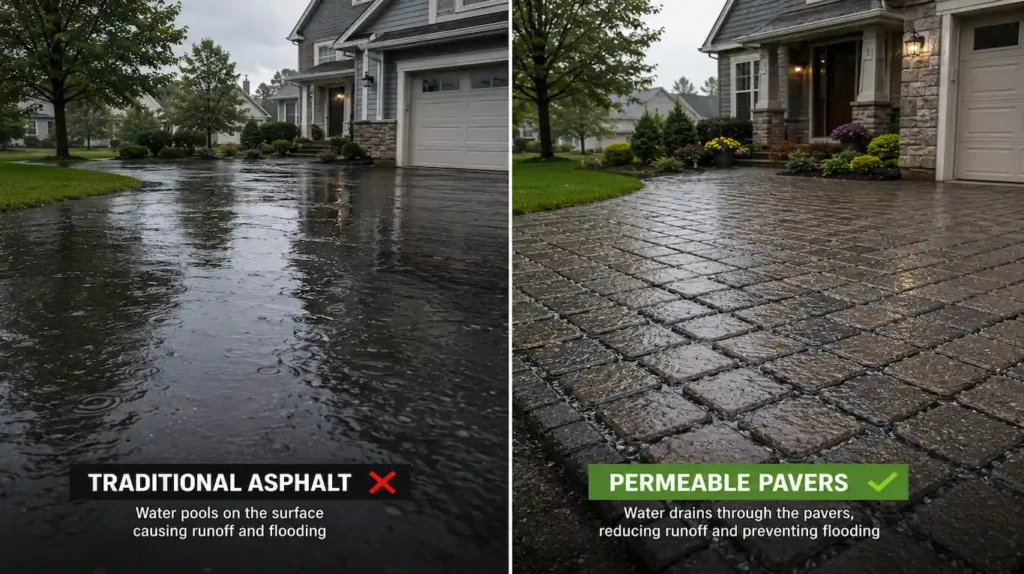
Asphalt and concrete are impermeable, which means water cannot pass through them naturally. That became important once I started researching the differences between concrete vs asphalt solutions for Buffalo properties dealing with drainage problems. Instead, water runs off the surface and collects elsewhere. In my case, that would have meant more water pooling in my yard or near my foundation.
I needed something that would allow for natural drainage. That’s when I discovered porous asphalt and permeable pavers. These alternatives do allow water to percolate through the surface and to the substrata below the surface.
I also learned of the many permeable driveway benefits, from less runoff and improved drainage to durability. It sounded good, but I wanted to make sure it would work for my situation.
After talking to experienced paver installers buffalo ny homeowners trust, I was confident enough to give it a go. The name that kept coming up was All Pro Paving Service. When I called them up at (716) 666-4241, it was the best decision I ever made for my property.
Many homeowners searching for paving contractors near me are now choosing permeable paving systems to solve drainage issues caused by Buffalo’s changing weather conditions.
How Permeable Pavers Work (In Simple Terms)
Before the installation, I wanted to know how this system worked. The team explained it clearly.
Unlike traditional paving, permeable pavers are designed with inter-unit spaces between each individual paver unit. These gaps are filled with a special permeable gravel that allows water to flow through. Below is a multi-layered crushed stone system that functions as a sort of reservoir. This lower layer is normally constructed of open-graded aggregate to help infiltration and provide structural support.
When it rains, water does not remain sitting on top. Instead, it spreads gradually through the surface and is collected temporarily below the surface, where it slowly infiltrates into the ground. This is an important part of a good stormwater management process.
This system is particularly useful in places like Buffalo, where heavy rains and snowmelt can flood regular drainage systems. It also supports eco-friendly paving, another huge plus in my book.
I was also worried that this might not work with my clay-heavy soil. The answer, as it turned out, was yes. If prepared well and worn with the appropriate base layers, a permeable system can actually be one of the best clay soil solutions there is.
The crew explained how Buffalo’s clay-heavy soil and harsh winters require deeper aggregate bases than many warmer regions. That local experience made a major difference in the performance of the installation.
To learn more about how permeable paving aids in sustainable drainage, see the U.S. Environmental Protection Agency’s green infrastructure page.
Installation: What the Process Looked Like
Installation was surprisingly easy. All Pro Paving Service took care of everything from beginning to end and clearly knew what they were doing.
First, they had my old driveway torn out and excavated to prepare the place for this system. They also placed several layers of crushed stone, compacting each layer, to form a solid base. This step is important in terms of longevity as well as drainage.
The next step was installing the permeable pavers. Each stone was placed with an exact distance between them so that the water could permeate its way through. The last step was to fill the joints with aggregate and compact the top.
They were detail oriented in this process. They took their time, and they got it right.
If you’re thinking about hiring reputable paving contractors buffalo ny has to offer, make sure you contact All Pro Paving Service at (716) 666-4241. They explained everything along the way and made sure I was comfortable with my investment.
Before moving forward, I spent a lot of time comparing installation costs, long-term maintenance expenses, and the overall value of different paving systems for Buffalo homes. One of my concerns was the permeable paver cost. Sure, it can be a bit more expensive upfront than conventional paving. But when you link these benefits to long-term savings from reduced flooding, lower maintenance, and higher property value, absolutely worth it.
If you are comparing paving contractors near me, look for companies experienced in stormwater management, drainage correction, and permeable paving systems specifically designed for Buffalo and the Niagara region.
Long-Term Value: More Than Just a Driveway Upgrade
One thing I didn’t fully realize at the beginning was how much long term value permeable paving would add to my property. Initially, my priorities were solely to solve my flooding problem. But over time, I started noticing other benefits that made this investment more worthwhile.
For one thing, they’ve been surprisingly easy to maintain. Permeable surfaces are built to accommodate natural expansion and contraction, unlike conventional surfaces that crack and need sealing. Traditional surfaces that trap moisture often end up with cracking, sinking, and freeze-thaw damage over time, especially in older Buffalo driveways. That means fewer repairs down the road.
Usually, the only maintenance required is an occasional cleaning to prevent the accumulation of debris. This makes a big difference in cost and effort for a regular driveway.
Another feature I encountered is the transition of the system during seasonal change. Buffalo’s freeze-thaw cycles are hard on pavement because trapped water expands during winter and slowly weakens the surface from underneath. But since water does not sit on the surface, there is less risk of ice forming and damaging the surface. This provides another level of protection and gives the surface a safety factor while walking and driving on it in the cold months.
And there’s an environmental benefit not to be overlooked. Permeable pavers and other green paving choices can cut down on pressure in municipal drainage systems. Instead of flooding storm drains, water seeps naturally back into the ground. This contributes to healthier soil and hinders pollutants from being funneled into nearby waterways.
In terms of property values, the upgrade has been apparent. Buyers have a good eye for a properly designed flood prevention driveway, and in Buffalo, drain issues are well known, so this is seen as a bonus. It indicates that the house has been renovated with longevity in mind.
I’ve had neighbors ask me about it, too, since they see how well it works. Now, many are considering the same asphalt approaches for their own properties. It’s interesting how one fix can get an entire neighborhood thinking differently about paving and drainage.
It was about smarter, more sustainable management of water. And in a place like Buffalo, that’s everything.
Quick Comparison Table: Traditional vs Permeable Paving
| Feature | Traditional Asphalt | Permeable Pavers |
| Water Drainage | Poor runoff control | Excellent infiltration |
| Flood Prevention | Low | High |
| Maintenance | Regular sealing needed | Minimal upkeep |
| Eco Impact | Higher runoff pollution | Eco-friendly paving |
| Suitability for Clay Soil | Limited | Strong clay soil solutions |
Is Permeable Paving Right for Your Buffalo Property?
If you have to contend with standing water, poor drainage, or soil that doesn’t absorb moisture well, permeable paving is well worth a look. It’s one of the best natural water management systems using asphalt solutions on the market.
Pro Tip: Have experienced installers, ones that know your local soils and drainage situations, do the work.
If in doubt, call All Pro Paving Service at (716) 666-4241 and request an assessment. They can advise you about whether it’s right for your property.
Life After Installation: A Noticeable Difference
The true test came with the first heavy rainfall after it was installed. I would have been prepared for a flooded yard. This time, though, something remarkable happened: nothing.
The water evaporated nearly as fast as it fell. No puddles. No runoff. No worries.
Since then, my property has stayed dry even during major storms. The change has been incredible. There was no more concern about muddy messes and water damage. Not only does my driveway look great, but it also performs even better.
This experience changed my whole perception of paving. They are not just about looks anymore. It’s about performance, sustainability, and your home.
If you are sick of water woes, don’t wait. Contact All Pro Paving Service now at (716) 666-4241 and get better asphalt solutions for your property.
Homeowners across Buffalo, Amherst, Cheektowaga, Tonawanda, and nearby Erie County communities are switching to permeable paving to protect their properties from water damage and drainage problems.
If your driveway or yard struggles with standing water, contact All Pro Paving Service for a professional evaluation and long-term drainage solution.
FAQ
Can permeable pavement prevent flooding?
Yes, it helps reduce flooding by allowing water to go down instead of sitting on the surface.
What is the best driveway for drainage?
Permeable pavers or porous asphalt are good choices because they also allow water to flow naturally and reduce runoff.
Do permeable pavers work in clay soil?
Yes, they are also good clay soil solutions, when used properly, with the right base layers.
Is the permeable paver cost worth it?
Although initially more expensive, permeable paver cost becomes a cost-effective solution in the long run.
Who are reliable paver installers buffalo ny homeowners trust?
All Pro Paving Service comes highly recommended by many homeowners for their knowledge and quality work. For further information, call (716) 666-4241.
In the end, switching to permeable paving wasn’t just a home improvement. It was a solution to a home problem. If you are experiencing this sort of friction, do not accept stopgap measures. There are better options out there, and the right team can help find them.