A well-marked parking lot isn’t just for looks. It keeps people safe, makes it easier for everyone to get in and out, and protects businesses from legal messes. Around Buffalo, a lot of companies spend time keeping their buildings and landscaping sharp, but then they forget about the lines in the parking lot. That’s a mistake. Ignore the striping long enough, and you’re risking fines in Buffalo, upset customers, or even lawsuits. This really matters for commercial properties all over Downtown Buffalo, Elmwood Village, North Buffalo, South Buffalo, Cheektowaga, Amherst, Tonawanda, and the ZIP codes 14201, 14213, 14216, and 14221.
Buffalo’s commercial corridors, especially along Main Street, Niagara Falls Boulevard, and the Kensington Expressway (NY-33), see some of the highest traffic wear on pavement markings, making compliance maintenance even more critical for business owners in Erie County.
Many owners think you stripe the lot once, then just move on. That’s not how it works. Buffalo weather, lots of traffic, and time itself really wear parking lines down. Local businesses sometimes get fined because their lots fail inspections or don’t meet accessibility targets set by Buffalo parking codes. If you’re over by Canalside, Sahlen Field, or Delaware Park, the traffic alone can wear out your pavement markings even faster.
If you own or manage a property, learning from common parking lot striping mistakes can save you money and headaches. Whether you work with paver installers in Buffalo, property managers, or maintenance crews, staying on top of compliance matters.
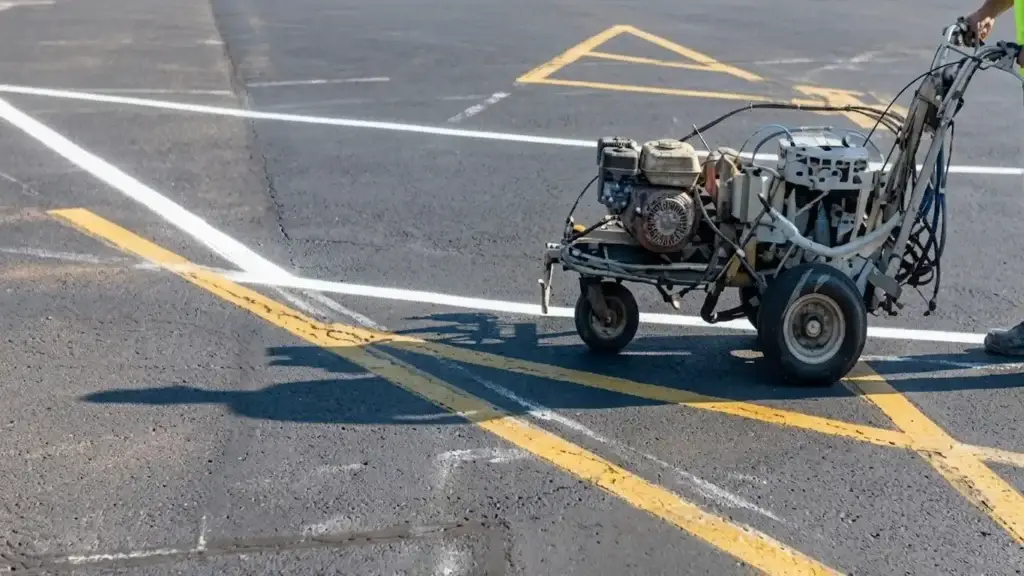
Many of the most expensive parking lot striping mistakes start with overlooked accessibility requirements and faded pavement markings.
Mistake 1: Not Enough Accessible Spaces
This one trips up a lot of people. Federal law tells you exactly how many accessible spots you need, based on the total in your lot. Some owners get it wrong or forget to update their count when the lot changes. All it takes is one inspection, and you’re facing a warning or a fine.
In most commercial inspections, officials evaluate not only the number of accessible stalls but also slope compliance, access route continuity, and pavement marking contrast visibility under ADA accessibility standards.
Accessible spaces aren’t just a “nice-to-have.” They’re required by law so everyone can get into your building. Skip them, and you’ll lose money and trust. Check your lot against ADA parking requirements routinely. If it’s not clear, ask a pro before an inspection.
Accurate accessible space calculations are a big part of ADA inspections and parking standards.
Mistake 2: Van Access Aisle is Too Tight
Here’s another common one: van-accessible spaces with aisles that just aren’t wide enough for wheelchair lifts. Sometimes people just repaint the old lines, thinking they’re good. From a distance, it might look okay, but inspectors use tape measures; being off by a couple of inches is all it takes to get in trouble.
Inspectors often review stall geometry, access aisle widths, and signage placement using standards referenced in the Manual on Uniform Traffic Control Devices (MUTCD). Even small measurement errors can create compliance issues during an inspection.
Spacing for handicapped stalls really matters. To play it safe, check your space and aisle widths once in a while, and hire professional striping crews. It’s way better than racking up fines for accessibility violations.
Good pavement marking contractors always measure aisle widths, accessible stalls, and traffic flow lanes as part of compliance checks, making sure everything is up to date.
Mistake 3: Lines Are Too Faded to See
Let’s be honest, Buffalo’s weather does a number on parking lots. Snow, ice, salt, plows, and truck traffic can wear off those lines fast. When they fade, drivers get confused, people block entrances, and accidents are more likely. Don’t wait until it’s a mess.
Most Buffalo commercial lots rely on traffic paint or thermoplastic striping materials, both of which degrade faster under freeze-thaw cycles, UV oxidation, and chloride exposure from road salt applications.
If there’s an accident and the markings are impossible to see, property owners can get nailed with liability issues and fines at the same time. Regular maintenance keeps this from happening. Get your lot inspected every so often, and restripe or repair it as needed for a safer, better-looking property.
Those who keep up with maintenance save a ton; striping fines in Buffalo add up fast if you just let things slide.
Common Parking Lot Compliance Issues
Most inspection failures in Erie County occur not because of a lack of parking spaces, but due to inconsistent pavement marking maintenance, outdated layouts, or non-compliance with updated ADA accessibility interpretations.
The following table highlights several parking lot striping mistakes that frequently lead to compliance concerns, safety issues, and costly corrections.
| Parking Lot Violation | Why It Happens | Possible Outcome |
| Faded Parking Lot Striping | Weather wear and traffic exposure | Failed inspection and driver confusion |
| Missing ADA Parking Signage | Neglected maintenance | Accessibility complaints |
| Incorrect Accessible Stall Count | Property modifications | Regulatory penalties |
| Improper Handicapped Stall Spacing | Incorrect layout measurements | Failed accessibility review |
| Missing Access Aisles | Improper striping maintenance | Customer safety concerns |
| Damaged Pavement Around Stalls | Lack of pavement preservation | Trip hazards and liability risks |
| Missing Traffic Control Markings | Faded arrows and lane markings | Traffic flow issues |
| Delayed Line Striping Inspection | Lack of routine maintenance | Undetected compliance problems |
In many cases, compliance issues are not identified until a formal inspection or customer complaint triggers a review. This is why proactive maintenance from experienced contractors is essential for long-term property value protection.
Expert Insight From Buffalo Parking Lot Projects
Based on commercial parking lot projects throughout Buffalo and Erie County, faded striping often becomes significantly less visible after one to two winter seasons. Properties with heavy traffic, including retail centers, industrial facilities, and office complexes, typically require more frequent pavement marking inspections to maintain parking lot safety compliance and pavement marking visibility.
Mistake 4: Missing or Bad Access Aisles
A sign and a painted stall aren’t enough; accessible spots need proper access aisles too. Sometimes people forget to paint the right lines, or landscaping and potholes get in the way. Inspectors never look the other way if aisles are missing or blocked.
To cover yourself, make sure every marking is clear and correct, and check the local rules, since they can be tougher than federal guidelines.
Understanding lot layout and keeping commercial striping up to standard is key. Not sure where you stand? Get a paving contractor in Buffalo to review your lot before the regulators do.
A lot of Buffalo-area accessibility inspections focus on aisle markings, arrows, and ADA-compliant signs.
Quick Tip: Annual Inspections Save Money
Most people forget about parking lots until there’s a problem. Don’t do that. A yearly striping inspection catches trouble early, so you can fix it easily and cheaply. Pros check the size of your spaces, visibility, traffic flow, and pavement condition.
These inspections let you find issues fast, before someone else does. This matters even more for busy lots, older pavement, or after big construction projects. While you’re at it, check for cracks and potholes; those ruin your striping and create safety hazards. Combine inspections with asphalt repairs, and you stop little issues from becoming big ones.
Owners who stay on top of maintenance spend less and have safer, more welcoming lots.
For help with Buffalo parking codes, accessibility, or upkeep, call All Pro Paving Service at (716) 666-4241 for advice that fits your spot.
When Should You Schedule a Parking Lot Striping Inspection?
Most property owners don’t think about striping inspections until the lines in their lot almost disappear. By then, you’re probably already facing compliance problems. It’s smarter to stay ahead and check your parking lot markings on a regular schedule.
Here’s when you should set up a line striping inspection:
- Right after snowplow season ends
- Whenever you resurface asphalt or do big pavement repairs
- Before you sell the property or renew a lease
- Any time you expect an accessibility or compliance inspection
- And at least once a year for busy commercial lots
Regular inspections catch faded lines, broken markings, traffic flow issues, and accessibility problems while they’re still minor. Tackling these with routine maintenance almost always costs less than fixing things after you fail an inspection.
Why Compliance Matters
Parking lot compliance is more important than ever. Accessibility standards are tighter, and property owners are feeling more pressure to keep lots safe and maintained.
A compliant lot shows you take customers seriously. You dodge legal messes, and everyone gets in and out without hassle. Use pros who know parking layout rules, striping codes, and ADA requirements; it changes everything. Solid planning and steady maintenance keep your business out of trouble and your customers coming back.
If you manage a plaza, an office, a restaurant, or an industrial site, inspect your lot and handle repairs. If lines are fading or compliance is slipping, now’s the time to fix it.
All Pro Paving Service at (716) 666-4241 helps Buffalo businesses spot problems, improve access, and steer clear of expensive mistakes.
To learn more about standard compliance requirements for your property, check the official ADA site.
Additional Risk: Poor Parking Lot Appearance Can Impact Customer Confidence
Before customers walk through your front door, they have already formed an opinion about your business. One of the first things they notice is the condition of your parking lot. Clean pavement, visible striping, and organized traffic flow create a positive first impression and make visitors feel more confident about your business.
When parking spaces are clearly marked, customers can quickly find a place to park and navigate the property without confusion. This is especially important for shopping centers, office buildings, restaurants, medical facilities, and other commercial properties that experience steady traffic throughout the day.
On the other hand, a parking lot with worn markings, uneven pavement, and unclear traffic directions can make a property appear neglected. Even if your building is well-maintained, a poorly marked parking area may leave visitors questioning the overall quality and professionalism of your business.
Property appearance can also influence customer retention. People are more likely to return to a location that feels safe, organized, and easy to access. Clearly defined parking spaces help maximize capacity, reduce driver frustration, and improve the overall customer experience.
For businesses competing in busy Buffalo commercial districts, small details can make a significant difference. Investing in fresh striping and pavement maintenance helps create a more welcoming environment while supporting your brand image. It also demonstrates attention to detail, which customers often associate with the quality of products or services offered inside the building.
Whether you operate a retail store, office complex, healthcare facility, or industrial property, maintaining an attractive parking lot can be just as important as maintaining the building itself. A professional-looking lot sends a clear message that you care about safety, organization, and customer satisfaction from the moment visitors arrive.
How Buffalo Weather Impacts Parking Lot Compliance
Buffalo’s weather is tougher on parking lots than most places. From heavy winter snow to wild spring freeze-thaw swings, local weather wears out paint and pavement quickly.
In winter, plows scrape away painted lines and mess up pavement. Salt and ice-melting chemicals speed up the damage. By spring, parking spaces, arrows, and accessible markings are way harder to see.
Freeze-thaw cycles make things worse; water gets into small cracks, freezes, expands, and busts up the pavement even more. Lines crack along with the surface, so nobody can tell where to park.
Parking lot striping lasts longer when the pavement underneath is properly maintained.
Proper pavement preservation strategies, commercial asphalt maintenance, traffic control markings, fire lane markings, and routine parking stall layout evaluations help property owners maintain long-term property management compliance while improving pavement marking visibility.
Cracks, potholes, drainage issues, and surface deterioration can cause markings to wear out more quickly. Many Buffalo property owners combine line striping inspections with asphalt repair services, crack sealing, and sealcoating to extend pavement life while maintaining compliance and improving property appearance.
A good rule: schedule parking lot checks after winter and before traffic picks up in summer. This helps you catch faded lines and bad pavement early. That way, you can restripe and repair before it becomes a safety issue or a fine.
In busy areas like Buffalo, Amherst, Cheektowaga, and Tonawanda, regular maintenance is the cheapest way to keep your lot safe, good-looking, and up to code. Working with experienced pros means your markings stay visible and compliant all year long.
Take care of your lot, protect your investment, keep up with striping requirements, and avoid surprise violations later.
Commercial property owners across Western New York often work with experienced contractors familiar with ADA enforcement trends, municipal Buffalo parking codes, and seasonal pavement maintenance cycles to avoid unexpected compliance violations.
Conclusion
It’s easy to ignore parking lot striping, but many parking lot striping mistakes can have a major impact on safety, accessibility, and your bottom line. Mess up the accessible spaces, squeeze the aisles, let the lines fade, or skip out on enough markings, and you’re looking at trouble.
Know the ADA rules. Keep lines crisp. Get inspections every year. Follow Buffalo parking codes. Stay ahead of problems, and you’ll avoid fines and keep people safe.
A little bit of care today saves a lot of hassle tomorrow.
All Pro Paving serves business owners all across Buffalo, Amherst, Cheektowaga, Tonawanda, Kenmore, and Western New York.
FAQ
How long does parking lot striping last in Buffalo?
Usually, you get about one to three years out of parking lot striping in Buffalo. But it really depends, heavy traffic, harsh weather, worn-out pavement, or even the striping material you pick all play a part.
Can snowplows remove parking lot markings?
Yes. Snowplows, road salt, and all that freezing and thawing in winter slowly grind down the markings. So to keep everything clear and up to code, you’ll need to restripe from time to time.
What is included in a parking lot striping inspection?
An inspection covers a lot. They’ll look at how the spaces are laid out, double-check accessible parking and access aisles, make sure signage and directional arrows are in good shape, and inspect fire lanes and other pavement markings to see if everything’s still visible.
Are property owners responsible for ADA compliance?
Yes, they are. If you own a commercial property, you’re the one who has to make sure accessible parking, access aisles, signs, and other features stay in line with ADA requirements.
When is the best time to restripe a parking lot in Western New York?
You want to wait until late spring through early fall. During that stretch, it’s warm enough, and the pavement is dry, so the paint sticks and cures properly.
Serving Buffalo, Amherst, Cheektowaga, Tonawanda, Kenmore, Williamsville, Lancaster, Hamburg, Orchard Park, and surrounding Western New York communities.