
If your driveway is starting to crack, fade, or develop potholes, you’re probably asking the same question many Buffalo property owners face: should you invest in sealcoating or replace the driveway entirely?
The answer can mean the difference between spending a relatively small amount on preventative maintenance and several thousand dollars on a full asphalt replacement.
While some driveways only need routine sealcoating to stay protected, others have underlying structural problems that surface treatments can’t fix. Understanding the difference can help you avoid unnecessary expenses and make the right investment for your property.
Buffalo’s climate creates unique challenges for asphalt. Freeze-thaw cycles, road salt, heavy rainfall, and seasonal temperature swings all contribute to pavement deterioration. Knowing how these factors affect your driveway can help you determine whether maintenance or replacement is the better long-term solution.
In this guide, we’ll explain when sealcoating makes sense, when replacement is the smarter option, and how to identify the warning signs before spending thousands on unnecessary work.
Property owners throughout Buffalo, Amherst, Cheektowaga, Hamburg, Orchard Park, and surrounding Erie County communities often face the same question when their driveway begins showing signs of wear.
Although pavement issues occur throughout Western New York, properties exposed to heavy moisture, road salt, and repeated freeze-thaw cycles often experience faster asphalt deterioration. Understanding the cause of the damage is the first step toward choosing the most cost-effective solution.
Understanding how Buffalo’s climate affects your driveway can help you choose the right solution before spending thousands on unnecessary work.
Let’s break down what sealcoating can and can’t do, how to know if your driveway’s still got life left, and when replacement actually makes more sense. If you’re not sure what your driveway needs, All Pro Paving Service (716) 666-4241 can check it out and steer you in the right direction.
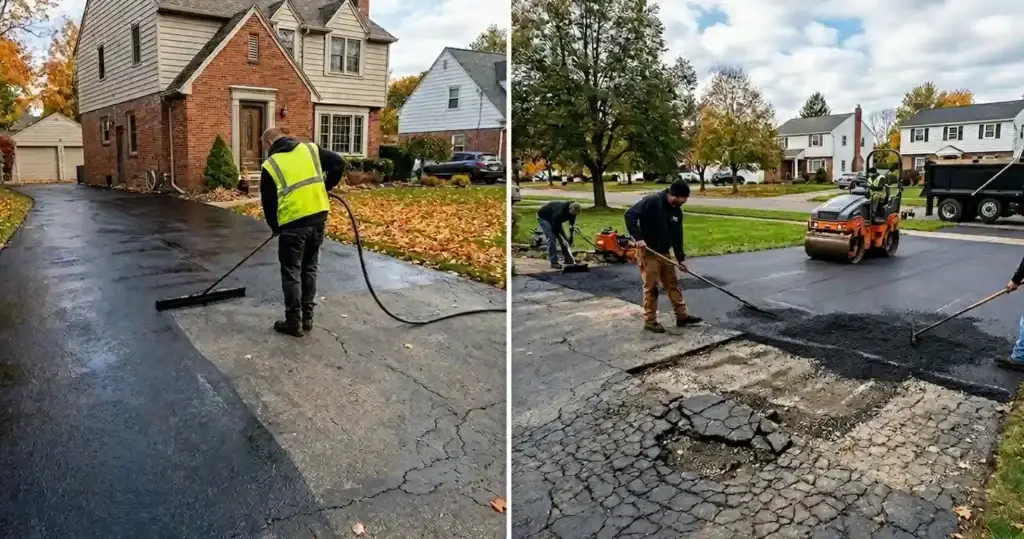
What Sealcoating Really Does (and What It Doesn’t)
Sealcoating is one of the best ways to protect your asphalt driveway. Think of it like putting sunscreen on your skin. It’s a protective layer that shields the surface from water, sun, car fluids, and all that Buffalo weather.
Professional asphalt contractors view sealcoating as one of the most effective preventative maintenance services available for asphalt pavement.
Sealcoating helps protect asphalt from sunlight, moisture, vehicle fluids, and everyday wear. Over time, ultraviolet (UV) exposure dries out the asphalt binder that holds the pavement together. This process, known as oxidation, can make asphalt brittle and more likely to crack. A quality sealcoat slows this deterioration and helps preserve the condition of the pavement.
One of the biggest things it does is keep water out. Water is asphalt’s worst enemy, especially when it slips into small cracks, freezes, and then expands. Next thing you know, you’ve got big cracks and chunks missing. Sealcoating helps keep that water from getting in and slows down the damage.
Sealcoating also makes your driveway look fresh. That deep, black color returns, and your property just looks sharper. If you’re thinking of selling, this makes a real difference in curb appeal.
Most importantly, regular sealcoating makes your driveway last longer. It prevents weather and sun damage, and if you maintain it, you won’t have to replace it nearly as soon.
But let’s be clear, sealcoating isn’t magic. It won’t fix major issues. If your driveway has serious structural problems, big potholes, a crumbling base, or endless cracks, sealcoating will only hide the problem for a short time. In those cases, you’re just burning money on a short-term bandage when you need real repairs.
Many people pay for sealcoating when their driveway actually needs to be replaced. Before you call anyone, you need to know what you’re really dealing with.
5 Signs Sealcoating Still Makes Sense
The upside? Many Buffalo driveways can benefit from sealcoating instead of full-blown replacement. Here are signs your driveway can be saved:
- Only minor surface cracks. Small or hairline cracks can be filled, sealed, and protected from getting worse.
- Faded color, not major damage. Asphalt fades as it gets older. If that’s the main problem, sealcoating will freshen it right up.
- The surface is still even and solid. If your driveway doesn’t have sinking spots and mostly feels stable underfoot, it probably just needs maintenance.
- Limited water damage. Small worn spots from water can be patched and sealed, especially if you catch them early.
- The pavement isn’t very old and has been cared for. Newer driveways that have had some attention over the years can go a long time between replacements.
If you spot these signs early and stay on top of maintenance, you’ll probably save a bundle by avoiding replacement. Regular sealcoating keeps your driveway looking good and strong.
Still not sure? All Pro Paving Service (716) 666-4241 will take a look and let you know what makes the most sense.
5 Signs Sealcoating Is a Waste, and It’s Time to Replace
Now, there are times when sealcoating just isn’t worth it anymore:
- Lots of alligator cracking. Cracks that look like reptile skin mean the structure is failing beneath the surface. Sealcoating won’t help here.
- Multiple potholes. One or two small potholes can be patched. But if the whole driveway has them, it’s a sign that deeper problems exist.
- Poor drainage or standing water. If water doesn’t drain off and pools in spots, something’s up with the base. Sealcoating won’t fix this.
- Sinking or uneven spots. When the base under the asphalt gives way, surface fixes won’t last. Time for a replacement.
- The driveway has just gotten old. If you’ve patched and sealed the driveway over and over and it’s still falling apart, replacement may save you money over yet another round of maintenance.
Lots of property owners find it hard to figure out when to finally pull the trigger on replacement. It’s really all about the condition, not the age; some driveways last decades if installed right and maintained, while others fail early from poor work.
A good rule: Don’t keep sealcoating if the problems keep coming back. Wasting money on quick fixes won’t change a bad foundation. That’s when professional advice becomes valuable.
Sealcoating or Replacement: What’s the Real Cost?
Sealcoating is way cheaper up front. You can treat a large driveway for a fraction of what replacement costs. If you keep up with minor repairs and sealcoating, your pavement stays solid for less.
Replacement’s a whole new ballgame. You’re looking at a demo, a new base, new asphalt, labor, trucks, the works. It costs several times as much as sealcoating.
But don’t focus just on the price tag today. Return on investment matters more. If your driveway is still structurally sound, sealcoating buys you years before you need to replace it, so a small investment now saves you big bucks later.
If the structure’s failing, replacement will save you money in the long run. You’ll spend less on repeated repairs and get a driveway that actually lasts.
The best plan is to treat maintenance like a strategy. Get inspections, patch those cracks, and stick to a sealcoating schedule that fits your property’s needs. That’s how you save money over the lifetime of your driveway.
You’ll hear experts recommend sealcoating every few years, but this depends on your traffic, weather, and age of the pavement. Don’t guess, get advice based on your own driveway.
| Feature | Sealcoating | Replacement |
| Initial Cost | Lower | Higher |
| Appearance Improvement | Excellent | Excellent |
| Structural Repair | No | Yes |
| Lifespan Extension | Yes | Complete Reset |
| Best For | Minor Wear & Tear | Major Damage |
| Project Time | Usually 1 – 2 Days | Several Days |
What Costs More in the Long Run?
Many property owners focus only on the upfront cost, but long-term value is often more important.
Sealcoating is generally one of the most affordable forms of asphalt maintenance because it protects the existing pavement from further deterioration. Replacement involves removing the old asphalt, correcting foundation issues, installing new material, and compacting the finished surface.
If the driveway remains structurally sound, regular maintenance can significantly delay the need for replacement. However, if the pavement foundation has already failed, continued repairs may end up costing more than replacing the driveway entirely.
The goal isn’t simply choosing the cheaper option today—it’s choosing the option that provides the best long-term return on investment.
Quick Tip: Try the 10 – Year Test
Here’s a trick many paving pros use:
If your driveway is less than ten years old, doesn’t have a lot of cracks, is still stable, and drains well, stick with sealcoating. It’s still doing its job.
But, if it’s more than ten years old, has cracks all over, potholes, or keeps needing patchwork, replacement’s probably the right call.
That’s not the only thing to consider; installation quality, weather, your maintenance history, and even how many cars use the driveway all matter. But the 10-year mark is a good way to start thinking.
Why Buffalo Weather Makes Everything Tougher
Buffalo’s wild weather brings unique headaches for asphalt. Heavy snows, icy winters, crazy temperature swings, and a few places are tougher on driveways.
In winter, water seeps into cracks and freezes, expanding and wrecking the pavement. Salt used for de-icing eats away at the surface. Summer sun bakes and dries the asphalt, making it brittle.
This means if you wait too long to fix small problems, you’ll be forced into expensive repairs. Staying on a maintenance schedule is the only way to fight back against Buffalo’s climate and save your investment.
According to pavement industry organizations such as the Asphalt Institute and the National Asphalt Pavement Association, moisture infiltration, oxidation, and repeated freeze-thaw cycles are among the leading causes of asphalt deterioration in cold-weather climates.
Properties throughout Buffalo and Erie County are especially vulnerable because water can enter small cracks, freeze during winter, and expand beneath the pavement surface. Repeated seasonal cycles gradually weaken the asphalt and accelerate cracking, pothole formation, and structural damage.
Why You Should Get a Pro Inspection
Most people just look at their driveway and guess how bad it is. The thing is, the biggest problems are often hidden.
A skilled contractor will check more than what you can see; they’ll spot drainage issues, measure surface evenness, and look for deep cracks. Sometimes, they’ll catch damage you wouldn’t have guessed, and often they’ll find you don’t need as much work as you thought.
A professional inspection can save you real money by stopping you from wasting cash on unnecessary work or by catching big problems before they get worse.
An experienced paving contractor evaluates key pavement performance indicators such as surface oxidation, longitudinal cracking, transverse cracking, alligator cracking, drainage efficiency, base stability, and asphalt surface integrity. These professional assessments help determine whether pavement preservation measures remain effective or whether full asphalt replacement provides a better long-term investment.
If you want reliable advice, call All Pro Paving Service (716) 666-4241. They’ll tell you exactly what’s going on and what your best options are, based on your actual driveway.
How to Decide: Sealcoating or Replacement?
Bottom line, don’t guess. Don’t just assume. Base your decision on what you see.
If your driveway’s still in good shape, sealcoating can protect it, keep it looking great, and save you from an expensive replacement for years. If it’s already breaking down under the surface, sometimes it’s smarter to just start fresh.
The most important thing is figuring out what your driveway actually needs before you spend a penny. Property owners who spot the signs and act early get better results for less money.
If you need repairs, regular maintenance, or think replacement might be around the corner, don’t wing it; get a pro’s opinion.
For honest advice on Buffalo’s climate, call All Pro Paving Service (716) 666-4241. Their team has seen everything let them show you exactly what will work for your property.
Conclusion
For honest advice tailored to Buffalo’s climate, contact All Pro Paving Service (716) 666-4241. Their team has extensive experience providing asphalt repair services, asphalt paving, driveway sealing, sealcoating, asphalt restoration, and pavement maintenance throughout Buffalo and surrounding communities. Whether your property is located in Amherst, Cheektowaga, Hamburg, Orchard Park, Lancaster, Tonawanda, or Williamsville, they can provide an accurate assessment and recommend the most cost-effective solution.
With the right info, Buffalo property owners protect their investment, improve their curb appeal, and keep repair bills under control.
FAQ
Should I sealcoat or replace my driveway?
If your driveway has small cracks, is faded, and feels solid, sealcoating’s probably your best option. If you’re looking at severe cracking, potholes, or sagging areas, replacement makes more sense.
When is sealcoating not enough?
Sealcoating can’t fix serious damage, like alligator cracks, lots of potholes, or a bad foundation.
How to know if a replacement is needed?
If you’re constantly repairing it, the damage is serious, or it never really looks or works right after maintenance, replacement is the way to go.
How often should I sealcoat?
For most Buffalo driveways, every few years works. If you have heavy traffic or a rough winter, you might need it more often.
Can sealcoating extend driveway life?
Absolutely. Sealcoating protects asphalt from water, sun, and the weather, keeping your pavement strong for years.