
Having a clean asphalt driveway not only contributes to the beauty of your house, but it is also very durable and safe. Most of the people who own houses do not see much sense in asphalt driveway maintenance, and this may cost them dearly later on, either in repair or a complete overhaul.
Routine maintenance, repairs, and preventive actions could greatly help in prolonging the life of your driveway and help save time and money. Here, All Pro Paving provides all the information you should know regarding how to ensure that your driveway is in excellent condition.
Why Asphalt Driveway Repair and Maintenance Matters
An asphalt driveway is subjected to violent weather, daily use, and exposure to chemicals, which leads to the degraded condition of the asphalt over time.
Cracks, potholes, and other problems that result in the loss of effectiveness of your pavement can happen due to sunlight, water, and extreme temperatures.
Maintaining the driveway well would prevent freeze-thaw damage and minimize the impact of heavy vehicle wear and tear, ensuring your driveway remains smooth and appealing.
With a routine of maintenance, you will save the cost of asphalt maintenance as well as provide a safe surface to both vehicles and pedestrians.
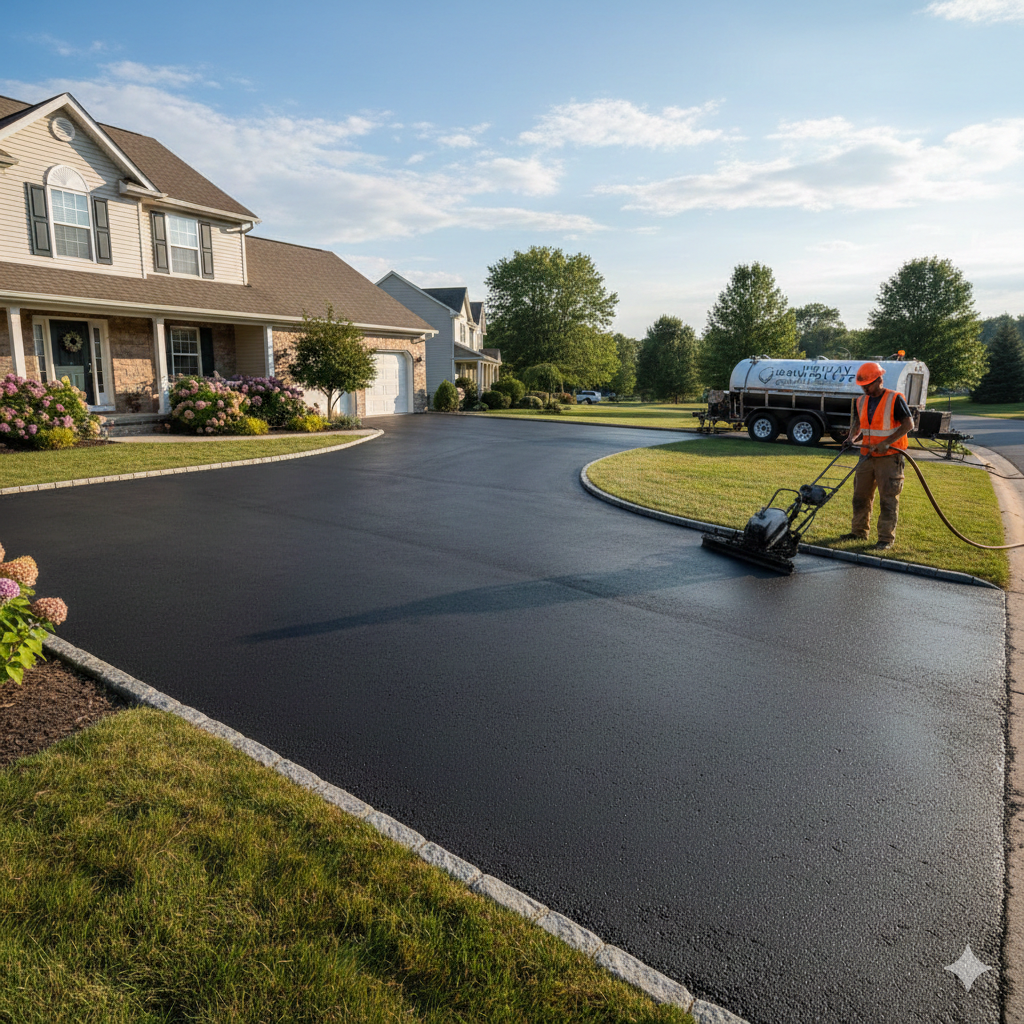
Driveway Maintenance Guide: Key Steps To Increase Your Driveway Lifespan
Cleaning and Stain Removal
Maintenance of your driveway is one of the easiest yet most useful ways to prevent asphalt deterioration.
Frequent cleaning will keep debris embedded in the asphalt from forming cracks or other discoloration. Begin with a stiff-bristled brush that wipes your driveway, getting it clean of dirt, leaves, and gravel.
This maintenance practice will prevent driveway foundation issues in the long term and maintain the asphalt surface level.
Oil stains and other spills are to be dealt with as soon as possible. Oil may percolate into the asphalt, hastening its deterioration. Oil stain removal from the driveway will be easier if you act earlier.
Mix baking soda, dishwashing liquid, or laundry detergent to remove normal stains. Stains that are more difficult are easily eliminated using commercial degreasers, which are applied using a stiff brush and rinsed effectively.
The maintenance of the surface also avoids the driveway drainage issues through the avoidance of blockages, which could trap the water and lead to erosion.
Fixing Cracks and Potholes
Small cracks can be insignificant, yet when they are not taken care of, water can seep in, freeze, and enlarge until it forms larger cracks or potholes.
Close small cracks with a good-quality crack filler to make sure they do not get any worse. In the case of larger potholes, the asphalt patch product should be used to fill the potholes. Not only does it repair cracks and potholes to protect your driveway, but it also helps in avoiding damage to your vehicle.
When the scale of damage is large, the services of specialists can be contracted to guarantee a sustainable solution. The professional contractors will be able to determine the case of full driveway resurfacing options or targeted repairs of your driveway.
Read more from Angi: How to Repair Asphalt
Sealcoating for Long-Term Protection
One of the most significant maintenance procedures is driveway sealcoating. A protective coated covering keeps off the UV rays, water, and other chemicals.
The majority of specialists suggest using a sealcoat twice or thrice-yearly in order to ensure the best safety. When installing new driveways, it is important to leave the asphalt to dry for six to twelve months before applying a sealant.
It is necessary to select the appropriate sealer. Latex-based, siloxane-based, and acrylic sealers can be applied to asphalt and offer long-term protection. Sealcoating not only makes your driveway look more attractive but also helps to avoid the effects of freeze-thaw damage, which may cause cracking and crumbling over time.
Managing Water and Drainage
Water is one of the major reasons for asphalt damage. Inadequate drainage is a source of pooling, erosion, and eventual deterioration. To defend your driveway, make sure that the gutters, downspouts, and landscape do not drain the pavement.
Do not use sprinklers that soak the ground constantly because this will make the asphalt foundation weak. Early response to the driveway drainage issues helps you cut future unwanted expenses in fixing the pavement and increase the durability of the pavement.
Avoiding Common Mistakes
Although proactive care is important, it is also good to know what to avoid. During winter, rock salt should not be used because it enhances the decomposition of asphalt.
Store away large vehicles such as RVs or construction machinery from your driveway because you will start getting dents or cracks due to the constant stress of heavy vehicles. Also, avoid oil-based sealers, which can ruin the asphalt over time.
If you’re wondering how to maintain an asphalt driveway with all these precautions and with regular maintenance, your driveway will be strong and sturdy.
Winter and Seasonal Maintenance
Extreme temperatures present special difficulties for asphalt. The freeze-thaw cycles may increase cracks and potholes, and proper preparation in winter is essential.
Make sure your sealant is not out of date when the cold weather arrives, and use less harmful de-icing salts such as potassium chloride rather than rock salt.
Completing the task of snow removal and cleaning up regularly also helps to keep the moisture and heavy vehicle driveway wear to a minimum, which protects your asphalt through the winter season.
Signs Your Asphalt Driveway Needs Attention
With routine care, it is important to check your driveway in case of premature damage. The cracks, potholes, and thinning of the side, pooling of water, and asphalt vs concrete driveway comparison can all be some signs that your asphalt needs something done with it.
Asphalt driveway maintenance may occur on a regular basis and could be an indicator that a long-term solution is needed to resurface or replace the whole part. By noticing these signs early enough, you will make sure you do not get into trouble growing the problems, and your driveway will be smooth and safe.
DIY vs Professional Driveway Services
Several homeowners factor in DIY and professional driveway repair. Although small potholes and minor cracks can usually be dealt with in the privacy of the home, large-scale cracks and recurrent problems ought to be taken care of by the professionals.
Contractors such as All Pro Paving offer the forces and machinery needed to make the repairs long-lasting so that in the years to come, the asphalt driveway will be both operational and attractive to the eye.
Cost Considerations
You may want to fix driveway cracks, but you’re wondering about costs. Costs vary depending on the level of work. Simple patching and crack filling are normally not costly, whereas extensive resurfacing or replacement is costly.
The average cost of asphalt maintenance would be between 300 and 4,700 dollars, and the cost of complete replacement would be between 4,200 and 9,000 dollars. Regular maintenance helps save you the cost of paying a lot of money to have your driveway fixed and even prolongs your driveway’s service life.
Conclusion
The asphalt driveway must always be maintained with a lot of effort and attention to detail. Clearing and patching of cracks to sealcoating and water control, all these steps can help in the distribution and the life of your pavement.
With this driveway maintenance guide in place, homeowners can avoid untimely deterioration and expensive maintenance and have a smooth, safe surface decades after installation.
The asphalt driveway maintenance today will lead to a long-lasting and good-looking one in the coming years.
Contact Us
Do you want professional advice or professional maintenance for your Asphalt driveway? You can count on All Pro Paving to provide your asphalt driveway with precision and attention. Contact us now!
FAQs
What is the frequency of resealing an asphalt driveway?
Every two to three years or so, it is suggested to reseal to prevent UV damage and water penetration.
How to fix cracks in an asphalt driveway?
Small cracks may be closed using a quality asphalt crack filler. In the case of bigger cracks, patch product or expert repair can be required.
Will heavy vehicles destroy my driveway?
Yes. The heavy vehicles, when parked, often create stress and depression that hasten the wear out of the asphalt.