
If you live in Buffalo, N.Y. (Erie County, including ZIP codes 14201, 14202, 14207, and nearby suburbs like Amherst, Cheektowaga, and Tonawanda near Lake Erie and the Niagara River region), you learn pretty fast that your driveway is not a luxury purchase but a long-term investment. Wind driven snow, ice pellets, and road salt, combined with freeze-thaw cycles, can destroy weak surfaces in a matter of a few years. That is why many homeowners look for reliable paving contractors Buffalo, NY serving Buffalo neighborhoods near Canalside, Buffalo City Hall, and South Buffalo residential zones who understand cold climate durability.
We eventually paved our driveway with tar and chip, not asphalt, in 2019. Five winters later, we finally have enough experience to provide a clear, honest update. This is not a sales pitch. It is a lived, temporal experience of weather and upkeep by a homeowner (homeowner experience in Western New York climate conditions).
If you’re researching driveway options, comparing asphalt solutions vs. gravel, and curious about how tar and chip ages in Buffalo, this story is for you. If you want expert help, call All Pro Paving Service at (716) 666-4241 for help with or installation of your asphalt (serving Buffalo, Lancaster, West Seneca, and surrounding Erie County areas).
Disclaimer: This blog is based on a homeowner’s 5-year experience after having a tar and chip driveway installed by All Pro Paving Services in Buffalo, NY. It is shared to help other homeowners understand long-term performance in real Western New York conditions.
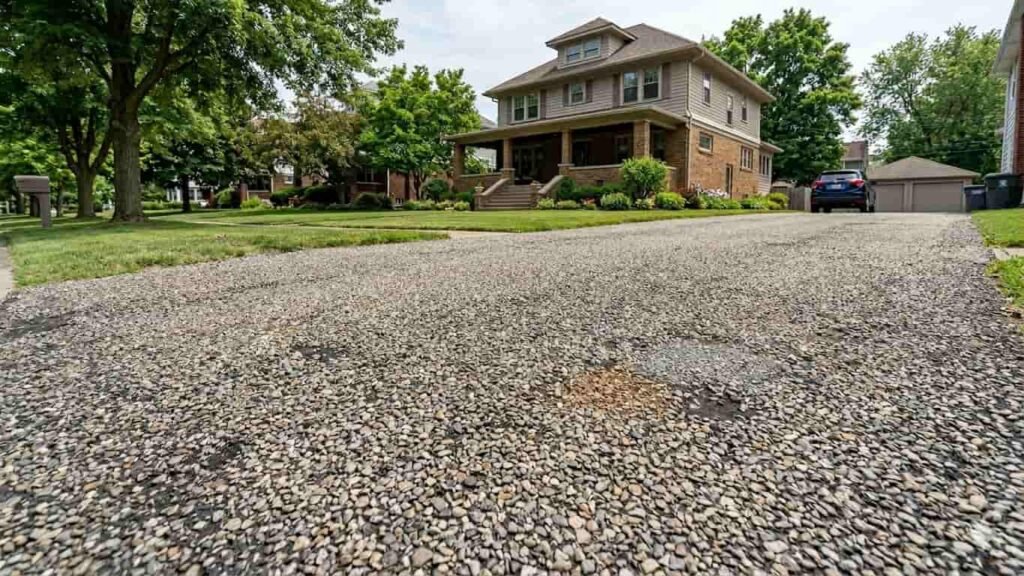
Why We Chose Tar and Chip Over Asphalt
In 2019, we were trying to decide between asphalt, tar, and chip. Asphalt is a popular choice, and paver installers Buffalo, NY will tell you it’s a good option for residential driveways. Cost and long-term maintenance also influenced our decision in a large way.
We were also dealing with a long rural driveway Buffalo style driveway outside the city center area near Lancaster and Orchard Park suburban corridors, so durability and appearance mattered. The idea was to look for something that could withstand seasonal alternations, without regular sealing.
Tar and chip cost vs value became the major deciding factor. Asphalt would need to be sealed every few years; tar and chip would provide a more natural, textural surface that would require less later maintenance. It was a compromise, but for a rural Buffalo driveway, it felt about right.
We also found quite a few actual tar and chip reviews from homeowners online who said they had good traction in the winter and that there were far fewer cracks than with conventional asphalt. So we felt a little confident to move on.
If you have questions regarding materials, try calling All Pro Paving Service at (716) 666-4241; they can advise you on whether tar and chip or asphalt is best for your needs.
For further technical reading on pavement types, though, you can also look for trusted infrastructure resources like the Federal Highway Administration.
Year 1-2: The Settlement Period
The first two years were just adjusting. It looked rough compared to smooth asphalt, but that is part of the way tar and chip is supposed to be. Liquid asphalt, into which small stones are embedded.
At this point, we became aware of the natural settling of the driveway. Our surface did not exhibit the early cracking that asphalt will if not installed properly. The traction was very good, especially on rainy days.
We recorded tar and chip maintenance during this time, but frankly, there was not much. No sealing was necessary, only light periodic cleaning of loose stones. That was a huge difference from what we had experienced with neighbors who went with asphalt.
We also noted its ability to cope with temperature swings. Buffalo weather can go from freezing mornings to mild afternoons in the same week, especially in lake-effect snow zones near Lake Erie and the Niagara Frontier corridor. The surface adapted nicely without visible damage.
By the end of year two, we began to see why so many homeowners opt for this method on long driveways. The natural look fits into our surroundings, too. This was especially true in a more rural driveway Buffalo.
We kept in touch with All Pro Paving Service (716) 666-4241 during this period for minor questions; their guidance helped us sidestep some maintenance missteps.
Year 3-4: Winter Put It to the Test
Three and four were the real test. Winters can be brutal in Buffalo (including heavy lake-effect snow bands across South Buffalo, Hamburg, and Depew areas). Cheaply constructed driveways will be quickly ruined by snow plows, ice buildup, and road salt.
This is where chip seal, after years, becomes important. Most materials will appear good at the beginning and begin to deteriorate after freeze-thaw cycles. We had better results with our tar and chip surface than anticipated.
We began to notice that small surface stones would shift slightly in melted areas, but not majorly. Our surface, unlike adjacent asphalt driveways that were cracked and wearing at the edges, appeared intact.
Another benefit was the grip in icy weather. The knobby texture was useful in creating traction, something that smooth asphalt lacked.
It was then that we began to appreciate tar and chip longevity. It does not require zero maintenance, but you can tell that, as far as winter havoc is concerned, it is more resilient than we originally thought.
In heavy snow, we also called All Pro Paving Service (716) 666-4241 for recommendations for snow plowing. They described how to set the plow blades so as not to disturb the surface, so that the driveway would be saved in the long run.
By the end of year four, we felt confident that tar and chip was performing as a viable alternative to traditional paving in cold climates.
Year 5: Current Condition and Maintenance Costs
Having put the condition through five Buffalo winters, we can make an accurate assessment.
The driveway still appears structurally sound. There are some small loose stones here and there, which is normal, but there is no major cracking or sinking. The contrast with neighboring asphalt driveways is stark.
The continued maintenance requirement of tar and chip maintenance is one of the more significant realizations. It is not zero maintenance, but it is lighter and cheaper than sealing asphalt every few years. A light touch or topping up here and there might be needed eventually, but not often.
The greatest benefit we have seen is stability. It survives through brutal winters. This is where chip seal, after years shine in the real world.
We also noted that installation quality has a huge impact on the longevity of tar and chip. It’s the preparation that matters. This is why experience is important.
If you are thinking of doing this, we strongly suggest you contact All Pro Paving Service (716) 666-4241. Their experience with cold weather installations makes a huge difference in long term results.
As far as cost, the tar and chip cost vs value equation still holds up. Initial costs were lower than those of asphalt, and maintenance has been reasonable.
Quick Comparison Table (Buffalo Winter Performance)
| Factor | Tar and Chip Driveway | Asphalt Driveway |
| Winter Traction | High grip due to the stone texture | Moderate, can be slippery |
| Freeze-Thaw Resistance | Good in Western NY climates | Prone to cracking |
| Maintenance Needs | Low to moderate | Moderate to high (sealing required) |
| Cost Over Time | Lower long-term cost | Higher due to sealing/repairs |
| Aesthetic Fit (Rural Buffalo) | Natural, textured look | Smooth, uniform finish |
Quick Tip: What Tar and Chip Owners Wish They Knew
One thing many homeowners learn too late is that tar and chip driveways are not set-it-and-forget-it surfaces. They are durable, but they respond to patterns of use.
Tire spinning in place, snowplow errors, and failure to notice slight stone displacement will all reduce the surface life. Tiny tweaks in care add up over time.
The second major takeaway is timing. Installing in the proper weather window ensures stronger adhesion/smoother cure.
If you are thinking about installing these, we recommend that you speak to All Pro Paving Service (716) 666-4241 early on to evaluate your property and suggest what might be the best installation for your needs.
Pro Tip: A key lesson learned: avoid heavy snow plow blades cutting into the surface. Keep the blade high and avoid scraping angles. This makes a huge difference in stone retention and helps prolong the life of your tar and chip driveway.
Conclusion
This was a sensible decision and a good choice. It may not be as perfectly smooth as asphalt, but it is durable, provides good traction, and has an earthy appearance that works well on rural and suburban properties.
Tar and chip is often excluded from consideration because it just looks different, but over time, performance matters more than appearance alone.
Overall, this has been a strong tar and chip review after 5 years, especially during Buffalo winters. We also noted before and after photos, and the long-term difference is surprisingly minimal compared with other surfaces in the area.
If you’re still weighing your options, contacting All Pro Paving Service (716) 666-4241 will help you see what will suit your property best.
FAQ
What is the lifespan of a tar and chip driveway?
If installed correctly and maintained regularly, it can last for years, often holding up well even after a few brutal winters.
Does tar and chip work in cold climates?
Yes, it works well in freezing weather because it has a texture to it and is flexible, vs being rigid like asphalt.
Tar and chip assessment after 5 years?
When installed correctly, after five years, it is often consistent, with only some loss of surface stones, but no major cracks.
What is the difference between asphalt, tar, and chip?
Asphalt is smooth and sealed, while tar and chip has a rocky, textured surface for better traction and less glare.
Is tar and chip high maintenance?
No, it is much lower maintenance than asphalt, needing only an occasional touch-up from time to time, not resealing.