
Gravel driveways are typical for rural properties outside of Buffalo. They are inexpensive, easily installed, and appear to be a good idea for rural driveways. But in time, homeowners discover that what seemed like a low-cost remedy often produces other difficulties. If you are considering gravel or have one, learn these common regrets so you do not waste time, money, and energy.
Serving Buffalo, NY, and surrounding areas, including Cheektowaga (14225), Amherst (14226), Tonawanda (14150), Orchard Park (14127), and Hamburg (14075), near landmarks like Lake Erie shoreline and Highmark Stadium in Western New York’s freeze-thaw climate.
But, after constant issues arise, most homeowners move on to finding paver installers or paving contractors in Buffalo, NY, or even asphalt paving near me. Many homeowners also begin searching for paving contractors near me when problems become ongoing. Let’s take a tour through real rural Buffalo homeowners and what they wish they knew.
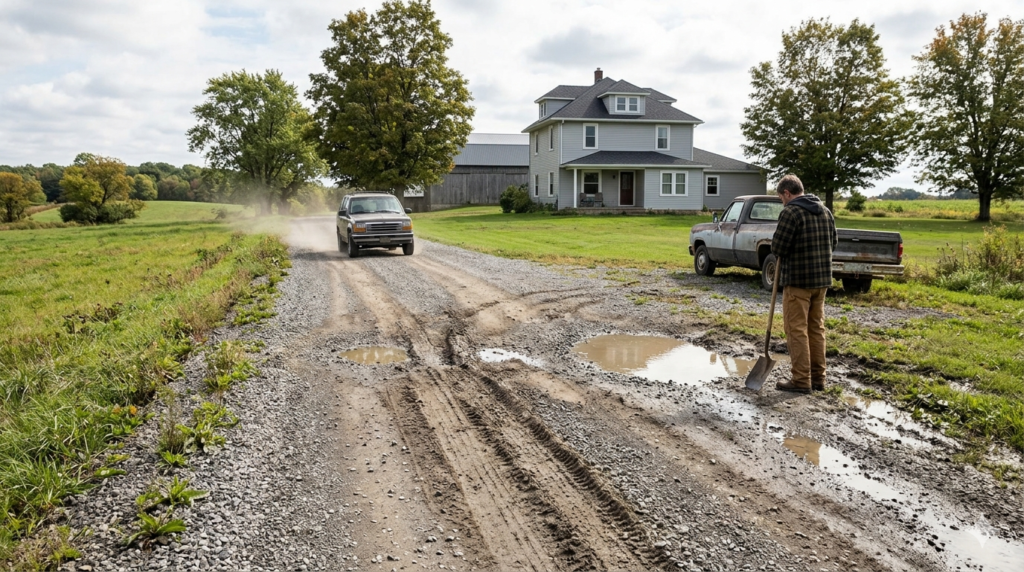
Regret 1: ” Underestimating How Often It Needs to Regrade”
Homeowners are often surprised to learn how much maintenance gravel driveways require.Vehicle traffic, rain, and snow produce ruts, potholes, and uneven surfaces over time, which is why many older driveways eventually develop cracking and deeper structural damage. This is uncomfortable for driving and can even damage vehicles.
Regrading is not a fix once and for all. It is a regular task. Most home and property owners require regrading of the gravel driveway at least once or two times per year, sometimes more with the weather.
The challenge is that gravel constantly shifts under traffic and weather conditions. Compound that with heavy rain or melting snow, and the surface goes soft, fast. The problem also worsens without consistent grading, which results in the pooling of water in low spots.
They find themselves wanting to try something else later because of the constant maintenance involved. That’s when many homeowners begin comparing gravel, tar and chip, and asphalt driveway surfaces to find a more durable long-term solution. If you are constantly having to regrade, contact All Pro Paving Service at (716) 666-4241 to discuss some more permanent options.
Regret 2: “Snow Plowing Is a Nightmare”
Buffalo winters are no joke. Heavy snow, ice, and freeze-thaw cycles can quickly expose weak driveway materials, which is why long-term winter durability matters so much for rural properties. A gravel driveway is all right in summer, but in winter, its major flaw becomes apparent.
Plowing snow on gravel is tricky. Many homeowners have snow plow damage gravel, where the plow scrapes not only snow but also gravel. This causes material to be lost, and the snow causes dishing as it melts.
Even seasoned plow drivers have difficulty with gravel, as there is no firm surface to follow the blade. Gravel, homeowners report, tends to shift, and they find themselves with banks of gravel displaced along the sides of their gravel driveway.
That means more repairs in the spring and more lost gravel to replace. These seasonal problems accumulate over time. And it’s part of why many people begin looking at rural driveway solutions that stand up to brutal winters.
If winter maintenance is an annual headache, call All Pro Paving Service (716) 666-4241 for a more durable alternative that handles snow much better.
Regret 3: “Weed Control Is Constant”
Weeds are also a huge source of frustration. Gravel driveways look neat for a while, but before long, they provide ideal conditions for weed growth.
Dirt and organic matter settle between the stones and provide a home for weeds. Soon enough, your driveway looks shaggy and unkempt.
Homeowners spend hours pulling the weeds or treating them, only to have them come back weeks later. It quickly becomes an ongoing maintenance cycle.
Some try gravel stabilizer grids or barriers, but these don’t fully solve the issue. Ongoing upkeep is still required, including weed control gravel methods, which help but do not eliminate the problem.
This maintenance can prompt homeowners to look for more permanent solutions that are not subject to the need for weed management.
Regret 4: “The Dust Gets Everywhere”
Gravel driveways create a lot of dust in dry months.
Every vehicle that drives over the surface kicks up fine powders. This dust accumulates on cars and outdoor furniture as well as windows, and comes indoors as well.
The gravel dust issues can be maddening, especially if your house is near the driveway. It causes more work cleaning up, but it can also impact air quality.
Homeowners have made attempts to hose down the driveway or apply special treatments to keep down dust, but these are stopgap measures. The problem returns as soon as conditions dry out again.
Dust is frequently a leading cause of regret for selecting gravel, and the impetus for seeking paved alternatives.
Regret 5: “Heavy Rain Causes Washouts”
Buffalo weather is not all about snow. Gravel driveways can also be a serious problem in heavy rainstorms.
Without proper drainage, water flows over the surface and removes the gravel, especially during heavy storms common across Western New York. The Environmental Protection Agency also highlights how poor stormwater drainage increases erosion and runoff issues. This creates ruts, visible earth, and rough patches that complicate driving.
Most homeowners are attempting to find ways for gravel washout prevention and are either attempting to direct where the water goes or create a “better” driveway. But these fixes often need tweaking.
Replacement gravel, as well as replacement repairs, becomes costly in the long run. That’s another reason homeowners will start to consider more permanent driveway solutions.
Regret 6: “It’s Not as Cheap as It Seems Long-Term”
The cost of initial installation is lower than that of asphalt or pavers. But many homeowners don’t account for long-term maintenance expenses, repair costs, and how driveway pricing compares over time between gravel and paved surfaces.
All of this constant grading, gravel replacement, weed pulling, and weather damage repair adds up to a cost in the long-term.
In the long run, considering years of maintenance, gravel may not really be as inexpensive as it seems. Most homeowners choose to put their money into a permanent solution instead of a band-aid fix.
If you are starting to get the feeling that your gravel driveway is costing more than you want to spend, consider calling All Pro Paving Service at (716) 666-4241 for alternatives that may save you money in the long run.
Gravel Driveway Reality Check (Buffalo, NY)
| Regret | Problem | Impact in Buffalo, NY |
| Regrading | Surface shifting due to weather | Frequent maintenance in Erie County freeze-thaw cycles |
| Snow Plowing | Gravel displacement | Winter damage near Lake Erie snowbelt regions |
| Weeds | Growth in stone gaps | Higher upkeep in humid summer months |
| Dust | Loose particles | Reduced air quality in rural Hamburg & Orchard Park areas |
| Washouts | Rainwater erosion | Drainage issues during Western NY storms |
| Long-term cost | Ongoing repairs | Higher lifetime cost than paved driveways |
Quick Tip: How to Fix Gravel Driveway Regrets (Without Full Replacement)
There are many ways to upgrade a gravel driveway if you aren’t ready to replace it entirely. Start with drainage to minimize washouts. Grading and drainage treatment can accomplish a lot.
Gravel stabilizer grids can also be added to help keep stones in place and prevent shifting. Regular maintenance of leveling and compacting the surface will also extend the life of your driveway.
For dust problems, the use of a binding agent can minimize loose material. In the case of weeds, a quality barrier is very helpful in inhibiting growth beneath the gravel, improving gravel driveway maintenance overall.
But these solutions are short-term. If you want a more permanent solution, comparing concrete and asphalt driveway options can help determine which surface performs best in Buffalo’s harsh climate.
A good rule of thumb is to assess your driveway annually. But detecting minor problems early can avert larger, and pricier, woes down the road.
Why Many Homeowners Switch to Paved Driveways
Once these problems are dealt with, most rural homeowners turn to paver installers or paving contractors in Buffalo, NY. Paved driveways are smoother, easier to maintain, and better at withstanding the elements.
Paved surfaces don’t shift like gravel, don’t create dust, and are much easier to clear in winter. Though the initial investment may be more expensive, it is a worthwhile investment in convenience and savings in the long run.
The Federal Highway Administration publishes credible information on unpaved roads and gravel surfaces, including maintenance, durability, and performance factors that are very relevant to concerns regarding gravel driveways.https://highways.dot.gov/
To learn what would be best for your property and budget, you can also call All Pro Paving Service at (716) 666-4241 for personalized advice.
Conclusion
While gravel driveways don’t appear to provide a cheap and easy fix, the experience of many homeowners shows that they pose continual and unforeseen difficulties. Frequent maintenance and weeding, winter damage, and dust are some of the negatives that can outweigh the positives over time.
Knowing about these shared regrets can help you decide more wisely. If you decide to improve on your existing driveway or pave over it, it’s important to know your options.
If you are sick of making continual repairs, contact All Pro Paving Service at (716) 666-4241 for details and other solutions for rural properties.
FAQ
What are the problems with gravel driveways?
Gravel driveways create ruts, dust, and weeds, and need constant maintenance of regrading and refilling.
How to maintain a gravel driveway in winter?
Use careful plowing, don’t scrape too deep, and repair the damage in the spring with some leveling and new gravel.
Why do people regret gravel driveways?
Many regret the maintenance, dust, weeds, weather damage, and upkeep.
Is regrading a gravel driveway necessary?
Yes, the regrading gravel driveway is regularly required to maintain a level surface and to protect from water damage.Are there better rural driveway solutions?
Of course, paved surfaces such as asphalt or pavers are also a popular rural driveway solution choice for their durability and low maintenance.