
If you own property in Buffalo, NY you know potholes are just part of life. The brutal winters, all that freeze-thaw, heavy traffic, and moisture beat up your pavement constantly. When a pothole pops up, it’s tempting to grab a DIY repair kit from the store. They’re cheap, quick, and promise a fast fix. But honestly, these patches rarely hold up for long. More often than not, you’re left annoyed, patching the same spot again and paying more each time.
The real issue is understanding why these quick fixes fail and what professional methods actually do differently. Once you see the difference, it becomes clear what truly works for pothole repair in Buffalo, NY, what doesn’t, and why investing in a professional asphalt repair service often saves more money in the long run—even if it feels more expensive upfront.
DIY Pothole Kits: What’s Really Inside?
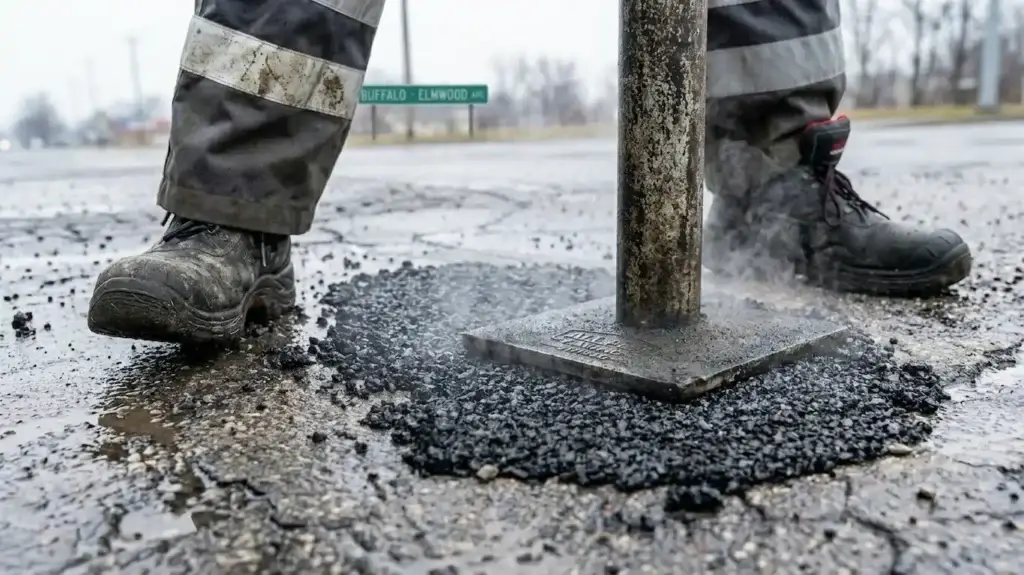
Those store-bought kits use something called cold patch asphalt. You pick it up at Home Depot or Lowe’s. The process sounds easy: sweep away debris, dump the patch in, tamp it down, and you’re supposedly done. For a tiny hole or very temporary pothole fix, sure, it can work, for a while.
Here’s where people get tripped up. Cold patch asphalt is designed as a short-term fix. Unlike hot asphalt, it doesn’t bond the same way, so it doesn’t have the strength to survive Buffalo’s nasty weather. Plus, just filling the surface doesn’t fix what’s happening beneath. Most potholes form because water gets under the pavement and weakens the base. If you only fill the gap, you ignore the real problem. The hole might look fine for a couple of months, but next thing you know, it’s back.
That’s why so many folks searching for asphalt paving near me end up calling professionals when the DIY approach keeps failing.
Cold Patch: Why It Just Doesn’t Survive Buffalo Winters
Winters here murder asphalt. Snow, salt, ice, and days cycling above and below freezing rip apart weak repairs. Water works its way into every crack, freezes, and expands. When temps rise, the ice melts, leaving gaps underneath. Cars drive over these soft spots, collapsing the pavement and opening up potholes.
Cold patch asphalt, unfortunately, doesn’t hold up. Since it isn’t heated, it doesn’t bond tightly with the existing asphalt. Water slips around the edges, and before long, the patch breaks apart. Add steady traffic from cars and trucks, and the repair starts shifting and crumbling. After the patch goes, moisture gets in faster, making it worse.
According to the Federal Highway Administration, the quality of the materials and how repairs are installed really matter. If you want a patch to last, it needs proper technique and strong materials.
That’s why Buffalo property owners end up patching the same holes every winter. The few bucks saved with a DIY kit often disappear when you’re patching the same spot over and over. It’s a perfect example of DIY vs professional repair and why the cheaper option often costs more later.
How Pros Handle Potholes the Right Way
Buffalo’s pavement faces unique challenges compared to many other parts of New York. Property owners in neighborhoods such as North Buffalo, Elmwood Village, Allentown, South Buffalo, and areas near the 14221, 14224, and 14226 ZIP codes often experience recurring pavement damage due to heavy snow accumulation and freeze-thaw cycles.
Roads and parking lots located near major Buffalo landmarks such as Delaware Park, Canalside, Buffalo Niagara Medical Campus, and areas surrounding the Buffalo River frequently experience significant traffic loads that accelerate pavement wear.
Property owners throughout Erie County, including Amherst, Cheektowaga, Tonawanda, Hamburg, Orchard Park, and West Seneca, often experience similar pavement problems due to seasonal weather changes and heavy vehicle traffic. These local conditions make professional pothole repair especially important for long-term pavement performance.
Professional asphalt contractors kind of know the local soil situation, they see how drainage patterns actually behave, and they understand weather-related stress factors that can really lead to potholes showing up. That kind of neighborhood expertise helps make sure that asphalt repair services are tailored for Western New York conditions, instead of just leaning on generic patch approaches that do not match what is happening on the ground.
A lot of the time, potholes are more like a visible sign of deeper pavement distress, such as subbase deterioration, water infiltration, aggregate displacement, and asphalt oxidation. Addressing these underlying causes is essential for long-term pavement performance.
As a paving contractor serving Buffalo and Erie County, we’ve seen firsthand that recurring potholes are often caused by underlying drainage issues, pavement subbase failure, and long-term water infiltration. Addressing these root causes helps create longer-lasting repairs and reduces future maintenance costs.
If you want a repair that won’t keep failing, working with experienced paving contractors Buffalo NY is usually your best bet. All Pro Paving Service (716) 666-4241 can walk you through options that actually work for our climate.
DIY Kits vs. Professional Repairs: What Really Costs More?
A cold patch asphalt kit costs less at first. Sometimes it’s only a fraction of hiring a pro. On paper, that looks like a win.
But think about what happens over time. That cold patch asphalt rarely lasts through a full winter. By spring, you’re patching again, spending more money and time.
Professional repairs charge more upfront, but the patch lasts longer. Upgrades like infrared repair or full depth patching mean you avoid the cycle of constant repairs.
So, when comparing pothole repair costs, don’t just look at the initial price tag. A fix that sticks around for years costs way less in the end than patching the same spot every few months.
Business owners get it. A well-maintained lot is safer, looks better, and makes customers happy. If you invest in professional asphalt repair services now, you prevent bigger, pricier problems down the road.
| Feature | DIY Cold Patch | Professional Repair |
| Initial Cost | Lower | Higher |
| Longevity | Short-term | Long-term |
| Water Resistance | Limited | Excellent |
| Winter Performance | Often Fails | Designed for Buffalo Weather |
| Structural Repair | No | Yes |
| Best For | Emergency Temporary Use | Permanent Solutions |
| Maintenance Required | Frequent | Minimal |
| Overall Value | Lower Over Time | Higher Over Time |
If you’re not sure what your pavement needs, All Pro Paving Service (716) 666-4241 can offer real advice and cost-effective solutions.
Quick Tip: DIY Is Sometimes Fine – But Not Always
There’s a time and place for a DIY pothole fix. If you need to patch a small hole fast to keep things safe, and it’s the middle of winter, go ahead and use a temporary pothole fix. It’s a handy band-aid until you can get a proper repair.
But if the pothole is big, keeps coming back, or there’s deeper pavement damage, the DIY vs professional repair comparison becomes pretty clear. Adding more material doesn’t fix what’s happening underneath.
If your driveway or lot shows serious cracks, has drainage problems, or you see signs the base is failing, call a pro. Infrared repair and full depth patching from experienced contractors give you far better results than repeatedly patching yourself.
Pothole prevention is even smarter. Regular sealcoating, filling cracks, improving drainage, and checking your pavement often helps your asphalt last longer and keeps repairs to a minimum.
Honestly, the best repair is the one you never need because you took care of your pavement before the problems started. Focusing on pothole prevention can save property owners thousands of dollars over the life of their pavement.
Not sure if you need a quick patch or a permanent asphalt patch solution? Give All Pro Paving Service (716) 666-4241 a call. They know Buffalo, and they can help you figure out what makes the most sense.
The Importance of Early Pothole Detection
People don’t always realize how important it is to spot pavement damage early, way before a pothole shows up. Those tiny surface cracks might look harmless, but they’re like open doors for water. Once water slips through and reaches the base layer, Buffalo’s freeze-thaw cycles get going, and the whole pavement starts breaking down from the inside out.
That’s why regular inspections matter. If you catch issues like alligator cracking, edges breaking up, sinking spots, bad drainage, or loose surface gravel early, you can fix them before things get out of hand and before repairs get expensive. Property owners who keep up with routine maintenance usually see their pavement last a lot longer.
Sealcoating and crack sealing go a long way toward protecting your asphalt. They block water and shield the surface from sun damage. When you add in professional repairs, these steps keep pothole costs down, sometimes by a lot.
So whether you manage an office building, run a busy store, handle an industrial site, or just want your driveway to survive another winter, investing in preventative maintenance beats the hassle and expense of a full reconstruction. In the Buffalo area, a little upkeep makes a big difference.
Conclusion
Potholes are more than just an eyesore. Leave them alone, and they’ll eat up your pavement, mess with your car, and create real safety issues. DIY kits are easy to grab, but most cold patch asphalt solutions don’t last, especially during Buffalo’s punishing winters.
Hiring a pro means they use proven methods like infrared repair or full depth patching, and install a permanent asphalt patch that actually stands up. You’ll pay more upfront, but you’ll save money and trouble in the long run.
So, when you compare DIY vs professional repair, look beyond the sticker price. Think about how durable the fix is, if it keeps your property safe, and whether it helps your pavement survive for the long haul. Maintenance is a huge investment in quality repairs, asphalt repair services, and pothole prevention, and you avoid repeated expenses.
If you need local advice, call All Pro Paving Service (716) 666-4241.
FAQ
Why do DIY pothole repairs fail?
Cold patch asphalt in DIY kits doesn’t bond as strongly as professional materials, and it ignores deeper structural issues and water damage.
How can I fix potholes permanently?
Permanent fixes require full depth patching, infrared repair, or a professionally installed permanent asphalt patch.
What’s the best pothole repair method?
Depends on the depth of the damage. Infrared repair works great for surface problems, but for deeper issues, full depth patching is the way to go.
What affects pothole repair costs?
Pothole repair cost depends on how big the pothole is, the state of the base layer, the repair method chosen, and how much pavement needs replacing.
How do I prevent potholes?
Stay ahead with sealcoating, crack sealing, keeping drainage in check, and regular inspections. Pothole prevention makes all the difference.