
Most driveway failures begin long before the asphalt is installed. Poor asphalt paving ground preparation can lead to cracks, sinking, potholes, and expensive repairs, even when high-quality asphalt is used. Proper site preparation, including soil compaction, subgrade preparation, and drainage planning, creates the stable base needed for a driveway that performs well for years.
Even top-quality asphalt can’t compensate for sloppy groundwork. Weak ground, poor drainage, or an unstable base will show up as cracks and sinks months or years down the road. That’s why a long-lasting driveway starts with what most people can’t see: the prep below the surface. This focus on asphalt failure prevention helps homeowners avoid costly asphalt paving repair in the future.
At All Pro Paving Service (716) 666-4241, good groundwork is the backbone of every job. The crew takes its time, focusing on prepping a base that’ll keep your driveway in shape for years. Thinking about a new driveway or tired of fixing up your old one? Give All Pro Paving Service a call; they’ll make sure it’s done right from the get-go.
The team proudly serves homeowners throughout Western New York, including Buffalo, Amherst, Cheektowaga, Lancaster, Hamburg, Orchard Park, West Seneca, Tonawanda, Niagara Falls, and nearby communities such as the 14221, 14224, 14043, and 14127 ZIP code areas.
Why Do Asphalt Driveways Fail?
Most folks figure that old age, weather, or too much traffic wears out asphalt. Sure, those things play a part, but the real answer is usually hidden: poor prep under the pavement. When the base isn’t solid, the asphalt starts to move every time a car rolls over it. This movement, repeated day after day, leads to cracks, sunken areas, and potholes.
One of the top reasons for driveway failure is poor soil compaction. Loose or fluffy soil keeps settling after the job’s done, so the pavement gets uneven and cracks. Bad grading errors are another issue. If the surface isn’t sloped to shed water, you end up with standing puddles, and water always finds a way to make things worse.
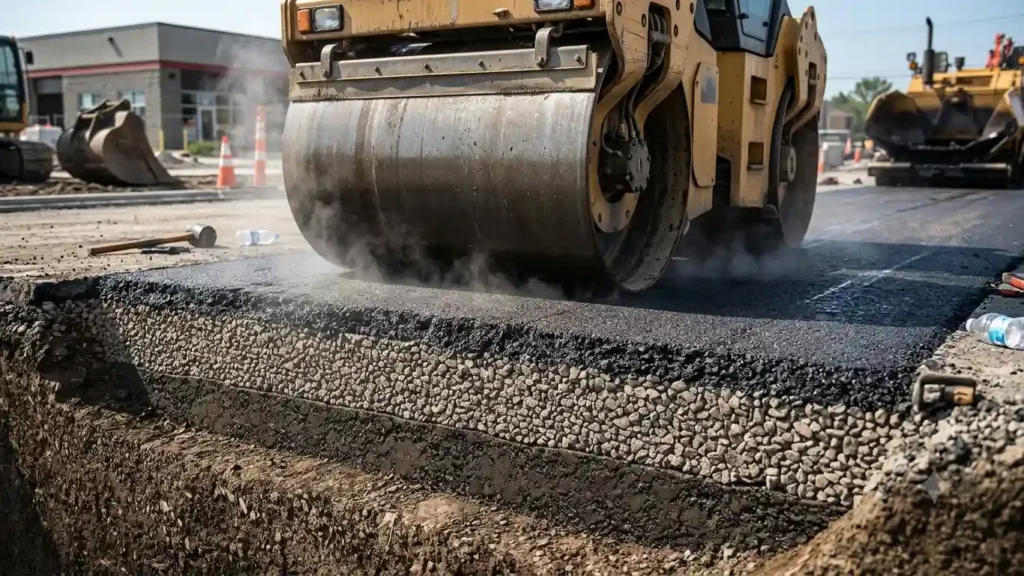
Good asphalt paving is more involved than just rolling out a layer of steaming asphalt. The process of asphalt paving starts with taking a hard look at the ground, fixing soft spots, putting down a solid stone base, making sure water goes where it should, and then finally placing and compacting the asphalt. Miss any of these steps, and the driveway won’t last. Proper asphalt paving installation always begins with professional site evaluation, subgrade preparation, and drainage preparation before any asphalt is placed.
When you hire All Pro Paving Service, you get a crew that knows this drill inside and out. They won’t skip the prep work just to get the job done fast. Their crews regularly complete asphalt paving installation projects near well-known Western New York landmarks, including Delaware Park, Highmark Stadium, and the Buffalo Niagara region.
The 4 Deadly Sins of Ground Prep
Most ground prep mistakes hide beneath the surface until you end up paying for fixes that hurt the wallet. Spotting these trouble spots helps you understand why it pays to do things right.
Sloppy Soil Compaction
A lot of early failures come down to soft ground. Soil is full of little air pockets, and if you don’t compact it enough, the ground settles after your driveway’s finished, leaving it cracked and uneven.
Pros use heavy compactors to squash down the soil before any rock or stone gets added. Professional soil compaction equipment helps create a stable pavement structure that supports long-term performance.
Weak Subgrade
Skipping over weak or mushy soil is another common slip-up. The subgrade is basically the dirt underneath your driveway. If it’s full of loose dirt, roots, or pockets of soft mess, it won’t hold up cars will sink, and your driveway will follow.
Every weak area needs to be fixed or built up before putting down stone. Skip this, and you’re looking at expensive repairs not far down the line. Many driveway failures begin because of subgrade preparation mistakes that could have been corrected before paving.
Bad Grading
If your driveway isn’t sloped right, rainwater will pool instead of running off. Water working its way under the pavement softens the base, creating empty pockets. Eventually, the asphalt cracks, and pieces start breaking away. Correct grading errors are essential for proper drainage preparation and long-term pavement performance.
Ignoring Drainage
The last big mistake is neglecting drainage. Water is asphalt’s worst enemy. Without good drainage, water seeps down, weakens everything, and eventually destroys the driveway from the inside out.
Skilled contractors plan the drainage before paving starts, which saves you money and headaches later. Effective drainage preparation reduces moisture damage and greatly improves asphalt failure prevention.
What Good Ground Prep Looks Like
Solid prep starts with knowing your soil. Every property’s different, so the approach has to fit the ground.
Step one is clearing all plants, roots, weak soil, anything that’s not up to the job. Stuff left behind breaks down over time and leaves hollow spots.
Next, the soil needs real compaction. Sometimes it takes several passes with special machines, and a good crew even tests the density to make sure it’s up to standard.
Tricky soils like clay usually need some extra muscle; sometimes, that means adding crushed stone, laying geotextile fabric, or mixing in stabilizers. Clay acts up when it gets wet or dries out, so it needs careful handling. These clay soil solutions improve stability and help prevent future movement beneath the pavement.
Before laying the stone base, the ground gets checked for the right slope so water drains away, not towards your house. It’s all about getting every detail right so your driveway stays tough.
The team at All Pro Paving Service knows Western New York soils and preps each job for long-lasting strength. Their experience with local soil conditions throughout Erie County helps ensure every asphalt paving installation begins with proper asphalt paving ground preparation.
Ground Preparation Checklist
| Step | Why It Matters |
| Asphalt paving ground preparation | Creates a stable foundation for the driveway. |
| Soil compaction | Reduces settling and cracking. |
| Subgrade preparation | Prevents weak spots beneath the pavement. |
| Drainage preparation | Directs water away from the driveway. |
| Stone base installation | Supports vehicle loads and improves durability. |
Why the Stone Base Is So Important
Once the ground’s ready, in goes the stone base the real muscle under your driveway. It spreads the weight and keeps the blacktop from moving.
If the base is too thin, soft, or made with junk stone, the driveway just won’t make it. Quality contractors use well-packed crushed stone that locks together, and they compact each layer before adding the next. A properly compacted aggregate base helps prevent base course failure and extends the life of the pavement.
A good stone base helps with drainage, too. Water seeps through rather than getting trapped, which cuts down on damage.
The right base sets your driveway up for less maintenance and more years of smooth, solid blacktop.
Drainage: The Silent Killer
Ask any pro, water ruins more driveways than anything else. Even perfect asphalt won’t last if water’s sneaking under the surface. Proper drainage preparation is one of the most important parts of asphalt paving ground preparation because it protects the entire pavement structure from moisture damage.
Smart drainage starts with a plan. Contractors look at how water runs off your property, then build the driveway so water flows away, not towards it. Experienced asphalt paving installation contractors also evaluate nearby grading, stormwater flow, and existing drainage systems before beginning the project.
If drainage is skipped or sloppy, water seeps through cracks, reaching the stone and soil. Then, in winter, freezing and thawing do even more damage. Over time, that’s a recipe for pavement failure. This is one of the leading causes of asphalt paving repair throughout Western New York, especially in Buffalo, Amherst, Cheektowaga, Hamburg, Orchard Park, Lancaster, West Seneca, Tonawanda, and surrounding communities where freeze-thaw cycles are common.
The fix isn’t hard: slope things right, and add features like swales or drains if needed. Spending a little extra on drainage now means you won’t pay a lot more to fix storm damage later. Homeowners living near the Buffalo Niagara region and major landmarks such as Highmark Stadium and Delaware Park can benefit from proper drainage preparation because local weather conditions often bring heavy rain and snow.
The Federal Highway Administration backs this up, drainage is key for pavement performance and long life.
How to Check If Your Ground Prep Was Done Right
Want to know if your contractor did their homework? Here’s what to look for:
- All grass, roots, and debris should be totally cleared.
- The ground should be firm, level, and packed tight.
- Any stone base should look consistent in depth with no soft, bouncy spots.
- Surfaces should slope gently away from your house, not towards it. Puddles shouldn’t stick around.
- A good contractor will walk you through every one of these steps and answer your questions.
- Ask whether proper asphalt paving ground preparation, soil compaction, drainage preparation, and subgrade preparation were completed before the asphalt paving installation began.
- Request information about the aggregate base thickness and the equipment used to compact each layer to reduce the risk of base course failure.
If your contractor rushes to pour asphalt right after digging, it’s a red flag.
When you’re not sure, call All Pro Paving Service. They’ll check the job and make sure you’re set up for success. The company proudly serves homeowners across Erie County and nearby communities, providing professional asphalt paving installation and asphalt paving repair services with a strong focus on long-term asphalt failure prevention.
Conclusion
Great driveways don’t just happen on the surface; the real work is below. Proper groundwork means careful inspection, solid compaction, smart drainage, right grading, and a strong stone base. Each step keeps your driveway looking good and holds off major repairs. Proper asphalt paving ground preparation remains the most important investment you can make for a long-lasting driveway.
Homeowners who invest in solid prep get driveways that last longer and need less fixing. Choose a crew that knows every detail of the process of asphalt paving, and you’ll protect your investment for years. Using professional clay soil solutions, correcting grading errors, and avoiding subgrade preparation mistakes all contribute to better asphalt failure prevention.
When you’re ready for a new driveway or need advice about repairs, call All Pro Paving Service at (716) 666-4241. They’re committed to quality from the ground up—so your driveway won’t let you down. Whether you live in Buffalo, Amherst, Cheektowaga, Lancaster, Hamburg, Orchard Park, West Seneca, Tonawanda, Niagara Falls, or nearby ZIP code areas throughout Western New York, their experienced team is ready to help with professional asphalt paving installation and asphalt paving repair.
Contact All Pro Paving Service
Phone: (716) 666-4241
Frequently Asked Questions
Why does ground prep matter for asphalt?
Without a strong foundation, the asphalt can’t hold up. Good prep supports the pavement, keeps cracks away, handles drainage, and stretches your driveway’s lifespan.
What if you skip ground prep?
You’ll run into problems like sinking, potholes, cracks, and bad drainage. All of these usually mean expensive repairs or new asphalt way sooner than you’d hoped.
How do you prep for asphalt paving?
Clear out soft soil and roots, check the slope, compact the soil, lay and compact a solid stone base, and make sure water drains away before the asphalt goes down.
What does it cost to fix a failed driveway?
Small fixes might run a few hundred bucks, but major issues from bad ground prep, like a failing base, can turn into thousands of dollars.
How can you tell if the prep was done right?
Ask about how the contractor handled the subgrade and base, how thick the layers are, what they used for compaction, if they planned for drainage, and what materials they used. A quality contractor will walk you through every stage before work begins.