
Most people walk past a newly paved driveway or road and just admire how shiny and smooth it looks. Rarely do they stop to think about how much heat is involved in the paving process. If you’ve ever planned to get new asphalt put in, you probably wondered how hot is asphalt when paving and why temperature matters during installation. This is more than just a construction detail. Fresh asphalt is hot enough to cause serious burns, which is why safety around paving work is so important. Whether you’re planning a residential driveway or a commercial parking lot, understanding asphalt temperature helps you stay safe and protect your investment.
Whether you’re organizing your own asphalt paving installation or just curious while passing an active construction site, a little knowledge about asphalt paving temperature and safety goes a long way. When crews install new asphalt, they need it to stay very hot so they can spread it smoothly and compact it just right. That’s also when it’s the most dangerous for anyone nearby.
Let’s dig into why heat matters in paving, how hot things actually get, and what you should be doing to keep yourself and everyone else safe during the process of asphalt paving.
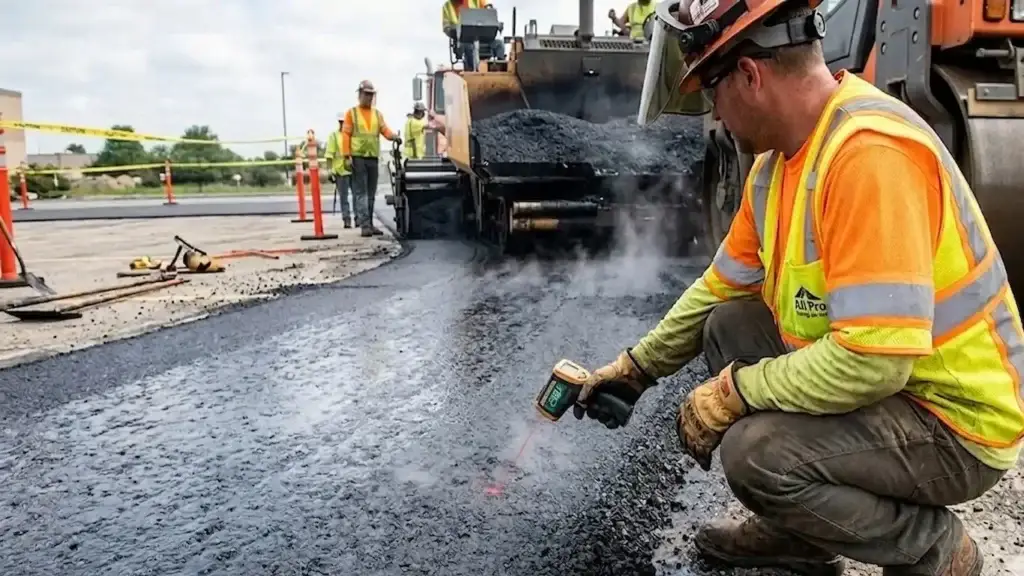
How Hot Is Asphalt When Paving?
It’s hotter than most ovens in your house. When asphalt leaves the mixing plant, it’s usually between 275°F and 325°F (135°C to 163°C). Most of the time, paving crews keep it above 250°F as they work it onto the surface. That’s not just for fun. It has to stay that hot so workers can spread and shape it before it gets stiff. If it cools too fast, the surface ends up weak and uneven.
There’s a little wiggle room on the exact temperature. It depends on things like which asphalt blend they’re using, how thick the layer is, the weather, and how far it has to travel from the plant to the job site. Professional paving crews continuously monitor asphalt temperature using infrared thermometers to ensure the material remains within the recommended compaction range throughout installation. The closer they stick to the right asphalt paving temperature, the smoother and tougher your pavement ends up.
One thing a lot of folks don’t realize is that asphalt keeps its heat for a while, even after the big machines have rolled away. Step onto it too soon, and you’ll regret it.
Typical Asphalt Temperatures
| Stage | Typical Temperature | Why It Matters |
| Asphalt leaves the plant | 275°F–325°F | Keeps the mix workable during transport |
| Placement and compaction | Above 250°F | Allows proper spreading and density |
| Cooling period | Gradually decreases | Prevents surface damage before use |
Why Asphalt Needs That Much Heat
People sometimes wonder if you could just lay asphalt at lower temperatures. Nope. The key is a material called bitumen, which glues together all the rocks and sand in the mix. Bitumen, the binder that holds the aggregates together, becomes workable only at high temperatures. This allows paving crews to spread, level, and compact the asphalt before it hardens.
From the plant, the hot mix goes to the job in insulated trucks, where it gets poured by giant paving machines. Then, powerful rollers press it into a dense, even blanket. Let it cool off too much before those rollers do their job, and you can end up with cracks, bumps, or weak areas that don’t last.
Professional paving teams consider weather conditions, haul distance, ambient temperature, and delivery time to keep the asphalt workable throughout installation.
Hot Asphalt Burn Risks and How to Avoid Them
Yes. Fresh asphalt can cause severe thermal burns because it adheres to the skin, allowing heat to remain in contact with the affected area longer than boiling water. Unlike hot water, asphalt sticks to the skin, making the burn more serious and increasing the risk of deeper tissue damage. If contact occurs, avoid trying to remove the asphalt yourself and seek medical attention so it can be removed safely.
Those most at risk are the workers who handle the hot material all day long. But homeowners, kids, and pets get hurt too, usually by stepping or falling onto fresh pavement by accident, or touching it without realizing how hot it still is.
The easiest way to avoid a nasty burn is to follow proper asphalt burn prevention methods. Stay clear of any active paving areas. After the job’s done, be patient and wait until the crew gives you the all clear to walk or drive on your new surface.
The Asphalt Paving Process From Start to Finish
Paving isn’t just about dumping hot black material on the ground. The process of asphalt paving happens in stages.
First, the team preps the surface, maybe digging out old pavement, fixing soft spots, and grading the area so the water drains away, or at least tries to. Next, they bring in the hot asphalt, then spread it out evenly like clockwork. Rollers follow immediately behind the paver, compacting the asphalt to achieve proper density, improve strength, and create a smooth, durable surface. After that, all you can really do is let the new surface cool down naturally, which can take several hours. Sometimes you can walk on it by the end of the day. For cars and trucks, you usually have to wait a full day or two.
At every step, asphalt paving installation depends on maintaining the correct paving temperature.
How Far Should You Stay From Fresh Asphalt?
There’s no rule carved in stone, but in general, you want to be out of the work zone until the paving company says it’s okay. Every job is a little different, so listen to what the crew tells you, and never cross cones or tape just to get a closer look. Following the recommended safety distance from fresh asphalt helps reduce the risk of accidents.
If you’ve got kids or pets, keep them inside or well supervised. The last thing you want is a burned paw or a trip to the emergency room. Practicing homeowner safety around asphalt helps protect everyone.
Safety Gear What Paving Crews Wear
Paving is sweaty, tough work, and it’s dangerous, too. That’s why professional crews always wear protective gear: heat-resistant gloves, long sleeves, and pants to cover their skin, steel-toe boots to protect their feet, safety glasses for their eyes, and bright vests so drivers and coworkers can easily see them. Depending on site conditions, crews may also wear hearing protection and respiratory protection to reduce exposure to noise and airborne particles.
These are important asphalt safety precautions that support worker safety, paving, and help prevent injuries while keeping projects running safely.
If you are planning a professional asphalt paving project, contact All Pro Paving Service at (716) 666-4241. Their experienced team follows proper safety procedures and delivers high-quality asphalt paving services for residential and commercial properties.
Don’t Forget What the Weather’s Doing
You might think all that matters is how hot the asphalt starts out, but outside conditions have a big impact, too. If there are low air temperatures, strong winds, rainfall, or surface moisture, the asphalt cools much faster, giving paving crews less time to complete the installation. On the other hand, warm, sunny weather means the asphalt stays workable longer and helps maintain the properasphalt mix temperature.
Contractors keep a close eye on the weather before deciding if they’ll pave at all. Sometimes, they’ll reschedule a job just to make sure they get the conditions they need for a great finish and the correct temperature for asphalt paving.
What To Avoid On Fresh Pavement
If your driveway or parking lot has just been paved, give it time to set up. Don’t walk or drive on it until you get the okay. Heavy vehicles, bikes, furniture, even lawnmowers, can leave marks or dents if used too soon. Waiting a little longer protects your investment and keeps the surface looking its best. Following these asphalt safety precautions also improves homeowner safety around asphalt.
If Someone Gets Burned
Accidents are rare if everyone’s careful, but they still happen. If hot asphalt burns your skin, cool the area right away with running water, don’t use ice, and don’t try to peel the asphalt off yourself. Cover the burn with a clean, dry cloth and get professional medical help as fast as you can. Medical professionals use appropriate techniques to remove asphalt without causing additional damage to the skin. Quick treatment is an important part of asphalt burn prevention.
Why Hiring Professionals Pays Off
Paving isn’t a weekend DIY project. It’s a job for trained people who know how to manage everything from asphalt paving installation and asphalt paving temperature to timing and safety. Skilled contractors follow all the right procedures, use proper worker safety paving practices, and set up the work zone so no one gets hurt. They also guide you through the process of asphalt paving and only open up the new pavement when it’s truly ready.
Professional contractors follow workplace safety practices established by the Occupational Safety and Health Administration (OSHA), including proper personal protective equipment (PPE), work-zone safety, and hazard prevention.
In the end, professional work gets you a smoother, tougher, and safer driveway or parking lot.
Conclusion
When you understand how hot asphalt is when paving, and that fresh asphalt often reaches 275°F to 325°F, you can see why working safely and hiring the right people matters so much. All that heat is important for quality, but it’s a real hazard if ignored.
Stick to the basics. Trust your paving crew, keep clear of the work zone, and don’t rush onto new asphalt before it’s truly set. Choose experienced professionals for your asphalt paving installation, and your pavement will last for years to come.
Ready to start a paving project? Give All Pro Paving Service a call at (716) 666-4241. Their team works to the highest safety standards and delivers quality results.
FAQ
How hot is asphalt during paving?
Fresh asphalt usually ranges between 275°F and 325°F, depending on the mix, the asphalt paving temperature, and the current weather.
Can asphalt burn you?
Yes. Hot asphalt burns can be severe because the material sticks to the skin.
What safety precautions should be taken?
Follow proper asphalt safety precautions by staying well clear of work zones, paying attention to the crew’s directions, keeping kids and pets inside or supervised, and letting the pavement cool fully before using it.
How far should I stay from fresh asphalt?
There’s no exact safety distance from fresh asphalt. Stay out of marked areas and wait until the workers tell you it’s safe.
What protective gear do paving crews wear?
To support worker safety, paving crews wear gloves, long sleeves, steel-toe boots, safety glasses, high-visibility vests, and, if needed, masks or hearing protection depending on the job.